Safe Alternatives to Bleach for Cleaning Bathrooms
Table of Contents
- Why Switch from Bleach: Health and Safety Concerns
- Safe Alternatives to Bleach for Cleaning Bathrooms: A Practical Comparison
- Natural Bathroom Cleaners UK: DIY Recipes and Combinations
- Homemade Bathroom Cleaner Recipes UK: Step-by-Step Application
- Limescale Remover Without Bleach UK: Effective Methods
- Safe Bathroom Disinfectants UK: Antimicrobial Alternatives
- Cost Analysis: Bleach Alternatives vs Traditional Bleach
- Long-Term Impact of Alternatives on Bathroom Surfaces
Last Updated: July 28, 2026
Why Switch from Bleach: Health and Safety Concerns
Household bleach poses genuine respiratory and skin risks. Inhaled bleach vapours irritate the lungs and airways, triggering coughing, shortness of breath, and asthma attacks in vulnerable individuals. Mixed with ammonia-based products, bleach produces chlorine gas, a toxic compound that can cause severe lung damage within minutes.
Safe alternatives eliminate these hazards whilst delivering equally effective cleaning power. Beyond immediate health risks, bleach degrades over time and corrodes bathroom surfaces, particularly older chrome fixtures and grout lines. Long-term exposure to bleach fumes increases the risk of chronic respiratory conditions, making safer alternatives essential for households with children, elderly residents, or anyone with respiratory sensitivities.
Never mix bleach with vinegar, ammonia, or other cleaning products. The chemical reaction produces toxic gases that can cause serious harm or death. Always ensure adequate ventilation when using any cleaning product.
Safe Alternatives to Bleach for Cleaning Bathrooms: A Practical Comparison
The most effective safe alternatives fall into several categories: natural acids (vinegar, lemon juice), abrasives (baking soda), oxidising agents (hydrogen peroxide, oxygen whitener), and essential oils with antimicrobial properties (tea tree oil). Each works through different chemical mechanisms, making some better suited to specific tasks.
| Alternative | Best For | Effectiveness | Safety | Cost |
|---|---|---|---|---|
| Vinegar | Limescale, soap scum | High on mineral deposits | Very safe | Very low |
| Baking soda | Scrubbing, deodorising | Moderate abrasive action | Very safe | Very low |
| Hydrogen peroxide | Disinfection, whitening | High antimicrobial activity | Safe (diluted) | Low |
| Lemon juice | Natural degreasing, bleaching | Moderate (citric acid) | Very safe | Low |
| Tea tree oil | Mould, mildew prevention | Moderate antimicrobial | Safe (diluted) | Moderate |
| Oxygen whitener | Stain removal, brightening | High oxidising power | Safe | Moderate |
Vinegar as an Effective Bleach Alternative
White vinegar’s acetic acid content dissolves mineral deposits, soap scum, and hard water stains. It works particularly well on chrome, glass, and ceramic tiles where bleach would cause pitting or discolouration. Vinegar kills many common bathroom pathogens, though it is less potent than bleach for heavy microbial contamination.
Spray undiluted white vinegar (5% acetic acid) directly onto surfaces and allow 10-15 minutes contact time before scrubbing. For stubborn limescale on shower heads or taps, soak affected areas in vinegar-soaked cloths overnight.
For tougher limescale, heat vinegar slightly before application. Warm vinegar penetrates mineral deposits more effectively than cold vinegar, reducing dissolving time.
Baking Soda for Scrubbing and Deodorising
Sodium bicarbonate (baking soda) is a gentle abrasive that removes stains without scratching most bathroom surfaces. Mixed with water to form a paste, it becomes an effective scrub for grout lines, tile joints, and soap scum on tub surrounds. Baking soda also neutralises odours rather than masking them, sprinkle it directly into drains, leave for 30 minutes, then flush with hot water to eliminate drain odours at their source.
Hydrogen Peroxide as a Disinfectant Option
Hydrogen peroxide (3% household strength) is a powerful oxidising agent that kills bacteria, viruses, and fungi without producing toxic fumes. It breaks down into water and oxygen, leaving no chemical residue. Spray 3% hydrogen peroxide directly onto surfaces and allow 10 minutes contact time before wiping. This duration gives the oxidising action time to penetrate cell membranes of microorganisms. Hydrogen peroxide also whitens and brightens bathroom surfaces, making it useful for removing stubborn stains on grout and caulking.
Do not mix hydrogen peroxide with vinegar or other acids. This combination creates peracetic acid, a corrosive substance that damages surfaces and irritates skin. Always rinse surfaces thoroughly between using different cleaners.
Lemon Juice for Natural Cleaning Power
Citric acid in fresh lemon juice dissolves mineral deposits and cuts through grease similarly to vinegar, but with a fresher scent. Lemon juice works best on fresh stains and light to moderate limescale. For heavy mineral buildup, vinegar’s higher acetic acid concentration delivers faster results. Combine lemon juice with salt to create a mildly abrasive paste suitable for scrubbing tiles and removing soap scum.
Tea Tree Oil and Oxygen Whitener for Mould
Tea tree oil is a natural antimicrobial agent effective against mould and mildew spores. Diluted tea tree oil (5-10 drops per 500ml water) creates a preventative spray that inhibits mould growth on shower walls and around window frames. Oxygen whitener (sodium percarbonate) provides stronger mould-killing power for established growth by releasing hydrogen peroxide when mixed with water. For prevention, spray diluted tea tree oil weekly. For active mould removal, apply oxygen whitener paste, allow 30 minutes contact time, then scrub and rinse thoroughly.
Natural Bathroom Cleaners UK: DIY Recipes and Combinations
Combining safe alternatives creates multi-purpose cleaners that tackle various bathroom challenges more effectively than single-ingredient solutions.
All-Purpose Vinegar and Baking Soda Paste
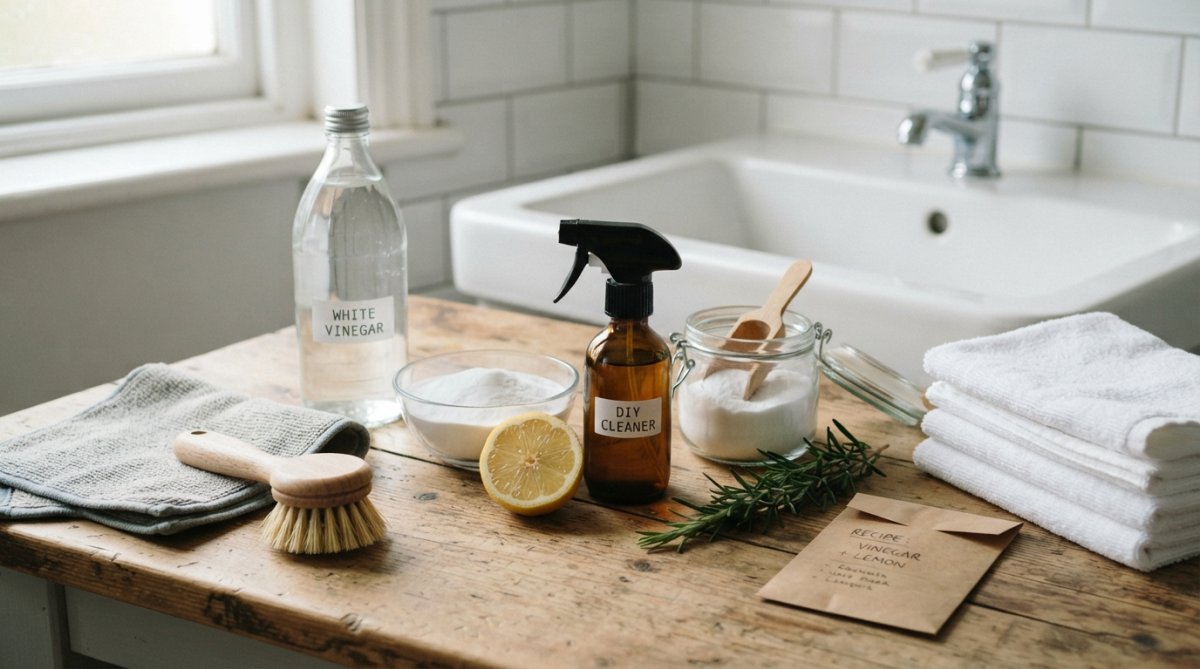
Mix equal parts white vinegar and baking soda to create a fizzing paste that combines chemical and mechanical cleaning action. The reaction between acid and base creates carbon dioxide bubbles that lift debris from surface pores.
Recipe:
- 250ml white vinegar
- 250g baking soda
- 10 drops essential oil (optional, for scent)
Mix slowly; the reaction is vigorous initially. Add essential oil once fizzing subsides. Store in a sealed container for up to 2 weeks. Apply with a stiff brush to grout, tile joints, and stubborn stains. Allow 15 minutes contact time, then scrub and rinse thoroughly.
Lemon and Salt Scrub for Tough Stains
Salt provides stronger abrasive action than baking soda alone, making this scrub suitable for heavily soiled grout and stubborn stains.
Recipe:
- 3 lemons (halved)
- 100g coarse sea salt
- 15ml olive oil (optional, for surface protection)
Dip lemon halves directly into salt, then use as a scrubbing tool on tiles and grout. The salt dissolves gradually as you scrub, releasing lemon juice continuously. For stubborn stains, allow salt-covered lemon halves to sit for 10 minutes before scrubbing. After scrubbing, rinse thoroughly and apply a light coat of olive oil to chrome fixtures to prevent water spotting.
Tea Tree Oil Spray for Mildew Prevention
Recipe:
- 500ml water
- 10 drops tea tree oil
- 5 drops lavender oil (optional, for scent)
- 2 drops castile soap (to help oil disperse)
Combine ingredients in a spray bottle and shake vigorously before each use. Spray on shower walls, window frames, and any area prone to mildew. Allow to air dry; do not rinse. Use weekly for prevention, or twice weekly in high-humidity bathrooms.
Homemade Bathroom Cleaner Recipes UK: Step-by-Step Application
Different bathroom surfaces and soiling types require slightly different approaches to prevent surface damage and ensure effective results.
Using Alternatives on Toilets and Grout
Process:
- Drain toilet bowl using a plunger or by turning off the water supply and flushing
- Sprinkle baking soda generously around the bowl interior
- Pour white vinegar slowly; the fizzing reaction breaks down stains
- Allow 30 minutes contact time for heavy stains
- Scrub with a toilet brush, paying attention to the waterline and under the rim
- Flush thoroughly
For grout lines, the vinegar and baking soda paste works best. Apply with an old toothbrush, working the paste into joints. For grout darkened from mould rather than mineral deposits, use oxygen whitener instead; its oxidising action kills mould spores whilst brightening discolouration.
Cleaning Tiles, Glass and Chrome Surfaces
For tiles: Spray undiluted white vinegar, allow 5 minutes contact time, then wipe with a microfibre cloth. For soap scum buildup, let vinegar sit for 15 minutes before wiping. Avoid abrasive scrubbers that can dull tile glazing.
For glass shower enclosures: Vinegar prevents water spotting on glass. Spray, allow brief contact time, then buff with newspaper or a lint-free cloth for streak-free results.
For chrome fixtures: Vinegar removes water spots and corrosion without damaging chrome plating. Never use abrasive scrubbers on chrome; use soft cloths only. After cleaning with vinegar, dry immediately with a soft cloth to prevent new water spotting.
Tackling Soap Scum and Hard Water Marks
Apply the vinegar and baking soda paste directly to affected areas and allow 15-20 minutes contact time. Scrub gently with a soft brush; aggressive scrubbing can damage grout and caulking. For prevention, squeegee shower walls and tub surrounds after each use. This removes standing water where minerals concentrate as water evaporates. Combined with weekly vinegar spraying, this maintenance approach prevents heavy scum buildup.
Limescale Remover Without Bleach UK: Effective Methods
Hard water deposits (limescale) are mineral accumulations that bleach cannot dissolve. Only acid-based cleaners work effectively, making vinegar, lemon juice, and commercial limescale removers the correct choice.
Vinegar’s acetic acid dissolves calcium carbonate and magnesium deposits. For heavy deposits, apply vinegar and allow extended contact time (30 minutes to overnight for severe cases). For shower heads clogged with limescale, unscrew and soak in a container of white vinegar overnight. Prevention reduces limescale accumulation significantly. Drying surfaces after use prevents mineral concentration from evaporating water.
Safe Bathroom Disinfectants UK: Antimicrobial Alternatives
Disinfection differs from cleaning. Cleaning removes dirt and debris; disinfection kills microorganisms. Safe alternatives to bleach must provide adequate antimicrobial action without toxic fumes.
Hydrogen peroxide (3%) is the most effective safe disinfectant among common household alternatives. Its oxidising action penetrates bacterial cell walls and disrupts cellular function. For surfaces requiring disinfection (toilet seats, door handles, light switches), spray hydrogen peroxide and allow 10 minutes contact time before wiping.
Tea tree oil provides antimicrobial action suitable for routine disinfection and mould prevention, though it is less potent than hydrogen peroxide for heavy contamination. Alcohol-based hand sanitisers (70% isopropyl alcohol) provide rapid disinfection on hard surfaces, though they are not ideal for porous materials like grout.
Effectiveness Against Common Pathogens
Hydrogen peroxide effectively kills common bathroom pathogens including E. coli, Salmonella, and Staphylococcus aureus with 10 minutes contact time. This matches the disinfection capability of diluted bleach without the respiratory hazards. Tea tree oil shows effectiveness against Candida albicans and some fungal species, making it particularly useful for mould and mildew prevention.
Surfaces to Avoid and Material Compatibility
Natural stone surfaces (marble, granite, limestone) are damaged by acidic cleaners including vinegar and lemon juice. Use pH-neutral cleaners or hydrogen peroxide on natural stone only. Older chrome and brass fixtures can be corroded by prolonged exposure to vinegar; test on inconspicuous areas first. Acrylic and fibreglass bathtubs and shower enclosures can be scratched by abrasive scrubbing. Use soft cloths and gentle cleaners only. Avoid baking soda scrubs on these surfaces; use vinegar spray instead.
Cost Analysis: Bleach Alternatives vs Traditional Bleach
A household using vinegar and baking soda for bathroom cleaning spends significantly less on materials than those using commercial bleach-based cleaners. Oxygen whitener costs more per unit but lasts longer because it is used selectively for specific tasks rather than as a universal cleaner. Over time, a family switching from bleach to safe alternatives typically saves money in cleaning product costs whilst reducing health risks and surface damage.
Long-Term Impact of Alternatives on Bathroom Surfaces
Bleach corrodes grout, caulking, and older metal fixtures over time. Natural alternatives actually preserve bathroom surfaces through gentler chemical action. Vinegar and baking soda cause no surface damage even with frequent use. Hydrogen peroxide breaks down into water and oxygen, leaving no chemical residue that accumulates on surfaces. Chrome plating lasts significantly longer when cleaned with vinegar and dried immediately rather than exposed to bleach fumes and residues.
Choosing safe alternatives to bleach for cleaning bathrooms protects your family whilst delivering superior cleaning results and preserving your bathroom surfaces long-term. Vinegar, baking soda, hydrogen peroxide, and lemon juice address every common bathroom cleaning challenge without toxic fumes or surface damage.
Discounted Cleaning Supplies stocks professional-grade versions of these safe alternatives, including hydrogen peroxide disinfectants and oxygen whiteners that deliver commercial-strength results for homes and businesses. With over 8,000 cleaning products available and fast UK delivery, Discounted Cleaning Supplies makes it simple to transition away from bleach-based cleaning whilst maintaining the highest hygiene standards.
Frequently Asked Questions
What can I use instead of bleach to clean my toilet?
Vinegar, baking soda, and hydrogen peroxide are excellent bleach alternatives for toilet cleaning. Pour undiluted white vinegar around the bowl rim, let it sit for 30 minutes, then scrub with a toilet brush. For tougher stains, combine baking soda with vinegar to create a fizzing paste. Hydrogen peroxide (3% solution) also works well as a disinfectant and can be used similarly to vinegar. These alternatives tackle stains, odours and disinfect without the harsh fumes of bleach.
Is white vinegar safe for cleaning all bathroom surfaces?
White vinegar is safe for most bathroom surfaces, including tiles, glass, chrome and sealed grout. However, avoid using it on natural stone surfaces like marble, limestone or travertine, as the acetic acid can etch these materials. Always test on an inconspicuous area first. Vinegar is particularly effective at removing limescale, soap scum and hard water buildup. Dilute it with equal parts water for general cleaning, or use undiluted for stubborn deposits.
How do I remove mould in the bathroom without using bleach?
Tea tree oil and hydrogen peroxide are effective natural alternatives for mould and mildew removal. Mix 10-15 drops of tea tree oil with water in a spray bottle and apply to affected areas. Let it sit for several hours before wiping clean. For oxygen whitener (oxygen bleach), mix according to package directions and apply to mouldy surfaces. Both options kill mould spores without the respiratory issues associated with chlorine bleach. For prevention, ensure good ventilation and reduce moisture in your bathroom.
Are natural bathroom cleaners as effective as bleach?
Natural alternatives can be highly effective for most bathroom cleaning tasks when used correctly. Vinegar, baking soda, hydrogen peroxide and tea tree oil all have antimicrobial properties and tackle common issues like limescale, soap scum and mildew. However, bleach remains superior for disinfecting against certain pathogens in heavily contaminated areas. For routine cleaning and maintenance, natural alternatives perform excellently. The key is matching the right alternative to the specific task, hydrogen peroxide for disinfection, vinegar for limescale, and baking soda for scrubbing.
Can I mix baking soda and vinegar for bathroom cleaning?
Yes, mixing baking soda and vinegar creates a powerful fizzing reaction that’s excellent for bathroom cleaning. The combination works particularly well on grout, tile grout lines and stubborn stains. Mix equal parts to form a paste, apply to the area, let it fizz for 15-20 minutes, then scrub and rinse thoroughly. This combination is safe, non-toxic and effective for soap scum, hard water deposits and general grime. However, avoid using this mixture on natural stone surfaces, as both ingredients are acidic.