Window Cleaning Kit: A Buyer’s Guide for UK Professionals
Table of Contents
- What Makes a Good Window Cleaning Kit
- Types of Window Cleaning Kits Explained
- Professional Window Cleaning Equipment: Essential Components
- Extendable Window Cleaner Poles: Reach and Safety
- Window Cleaning Solution: Choosing the Right Formula
- Comparing Window Cleaning Kit Types: Pros and Cons
- Choosing the Right Kit for Your Needs
- Recommended Products
Last updated: August 2026
What Makes a Good Window Cleaning Kit
A window cleaning kit is only as effective as its weakest component. The difference between a professional result and streaky, disappointing windows often comes down to having the right tools working together. At Discounted Cleaning Supplies, we’ve helped thousands of commercial cleaners, facilities managers, and homeowners understand what separates a genuinely useful kit from one that frustrates you mid-job.
The core requirement is simple: each component must do its job without compromising the others. A squeegee that leaves lines defeats a bucket system that delivers perfectly mixed solution. A cloth that sheds fibres ruins glass that a quality blade just cleaned.
The best window cleaning kits share three characteristics. First, the components are compatible and designed to work together. Second, they’re built from materials that endure repeated use without degrading. Third, they’re proportioned for the task. A bucket designed for window cleaning holds the right volume without being unwieldy. A squeegee blade is wide enough to cover ground efficiently but narrow enough to maintain control.
The most overlooked component in any window cleaning kit is the drying cloth. A poor-quality cloth with loose fibres will undo everything a professional squeegee accomplishes. Invest in microfibre or lint-free cotton specifically designed for glass.
Types of Window Cleaning Kits Explained
Different window cleaning scenarios demand different approaches. Understanding the three main kit types helps you avoid buying equipment that won’t suit your actual work.
Traditional Bucket and Squeegee Kits
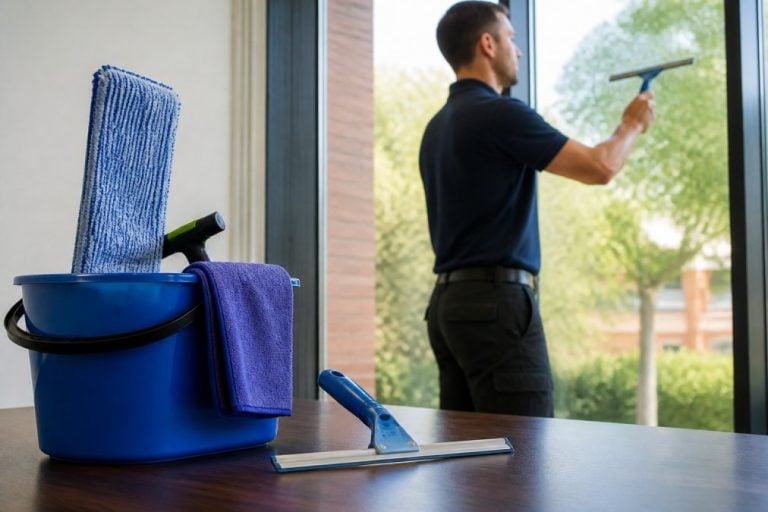
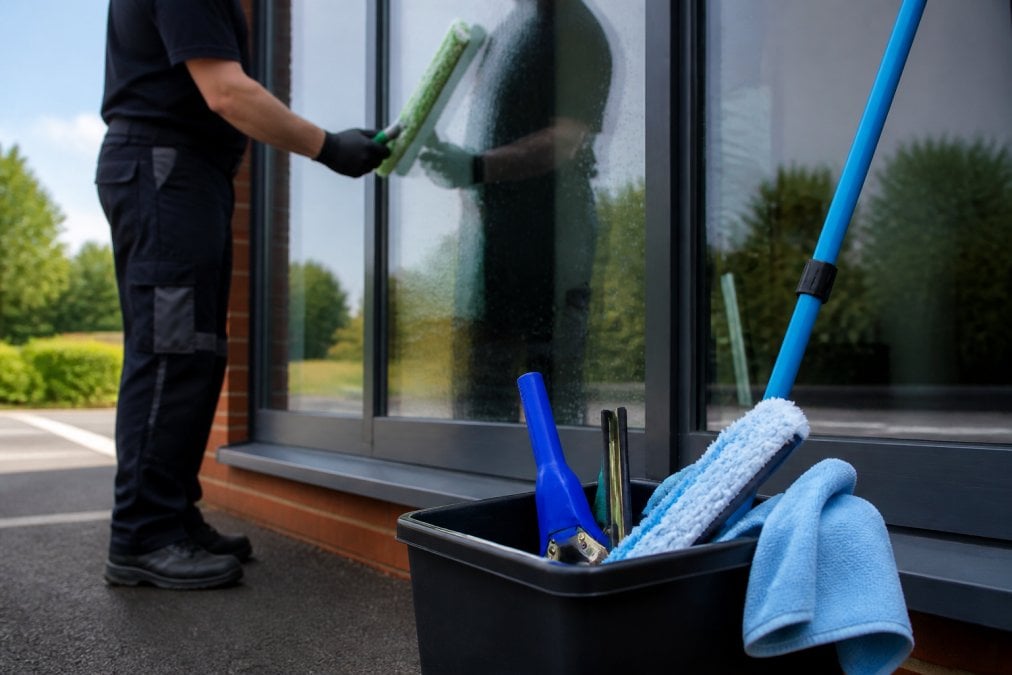
The bucket and squeegee system remains the industry standard. This approach uses a bucket to hold cleaning solution, a squeegee to remove water and solution from glass, and cloths for drying and polishing. It’s reliable, affordable, and works on virtually any window.
Traditional kits excel when cleaning ground-floor windows, shop fronts, or interior glass. The bucket sits within arm’s reach, and you can refill the squeegee continuously without repositioning. For a single-storey house or small office, this is often the most practical choice.
The limitation appears when height becomes a factor. Carrying a bucket up a ladder is awkward and dangerous. For a facilities manager maintaining a 10-storey building, this method becomes labour-intensive and time-consuming.
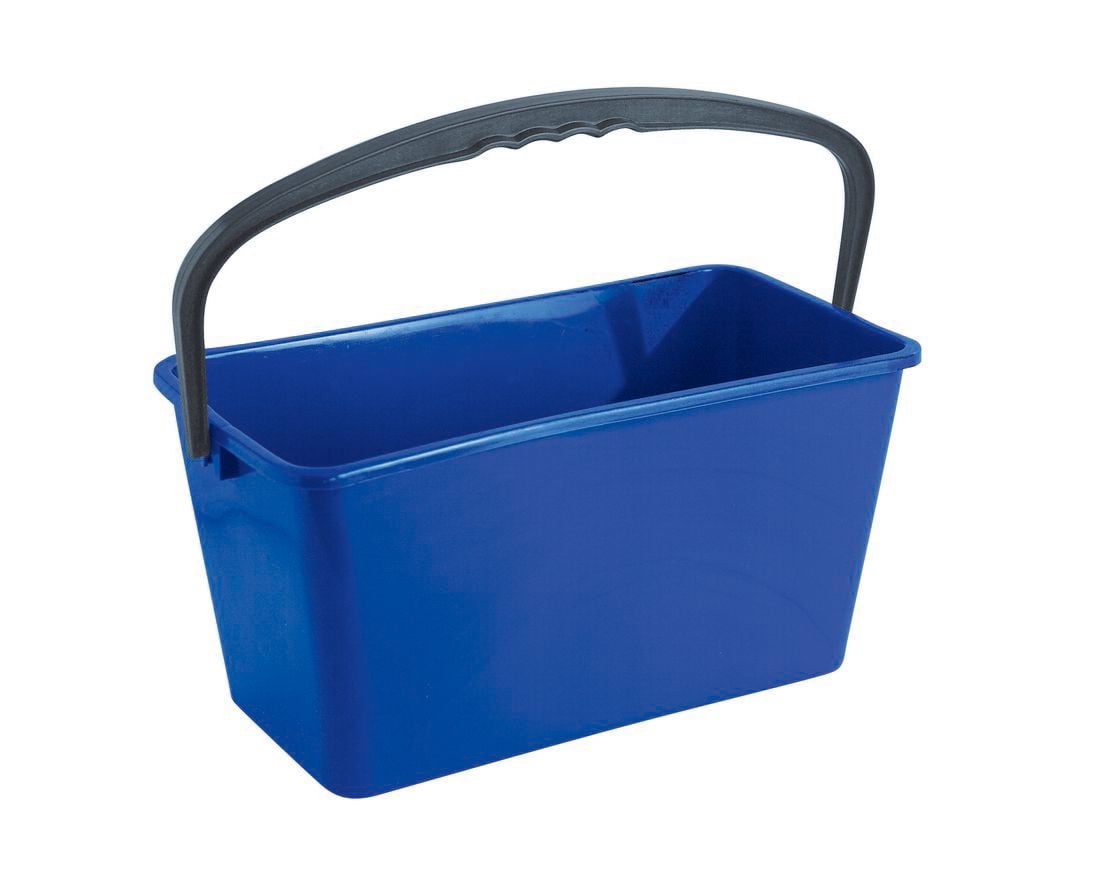
A quality bucket and squeegee kit from Discounted Cleaning Supplies includes a [DCS 12 Litre Blue Utility Bucket](https://www.discountedcleaningsupplies.co.uk/dcs-12-litre-blue-utility-bucket), which holds cleaning solution without tipping easily and features a handle designed for safe carrying.
Magnetic Window Cleaning Systems
Magnetic kits use opposing magnetic forces to clean both sides of a window simultaneously. One magnet sits on the outside of the glass, the other on the inside, and they attract each other through the pane. As you move the outside magnet, the inside magnet follows, cleaning both surfaces at once.
These kits are ingenious for specific applications. Conservatory roofs, skylights, and windows in buildings where external access is restricted all benefit from magnetic systems. You avoid the need for scaffolding or ladders on the exterior.
The trade-off is significant. Magnetic systems work only on non-magnetic frames, and very thick windows reduce the magnetic pull. The magnets themselves are expensive compared to traditional equipment. For standard exterior windows where ladder access is feasible, the magnetic approach adds complexity without proportional benefit.
Water-Fed Pole Window Cleaning Systems
Water-fed pole systems use an extendable pole with a brush head connected to a water supply. The pole extends to 10 metres or more, allowing cleaners to reach upper windows from ground level. Water flows through the pole to the brush head, loosening dirt and rinsing glass without the need for a separate squeegee or bucket.
This approach dominates professional window cleaning services for commercial buildings. The reach eliminates ladder work for most residential and low-rise commercial properties. A single operator can clean 30-40 windows per hour, compared to 15-20 with a bucket and squeegee.
The entry cost is higher, and the system requires training. For a commercial cleaning company or facilities team responsible for multiple buildings, water-fed poles pay for themselves quickly. For a homeowner cleaning their own house twice a year, the investment rarely justifies itself.
Professional Window Cleaning Equipment: Essential Components
Understanding what each component does helps you choose a kit that actually works for your situation.
Squeegees and Blades
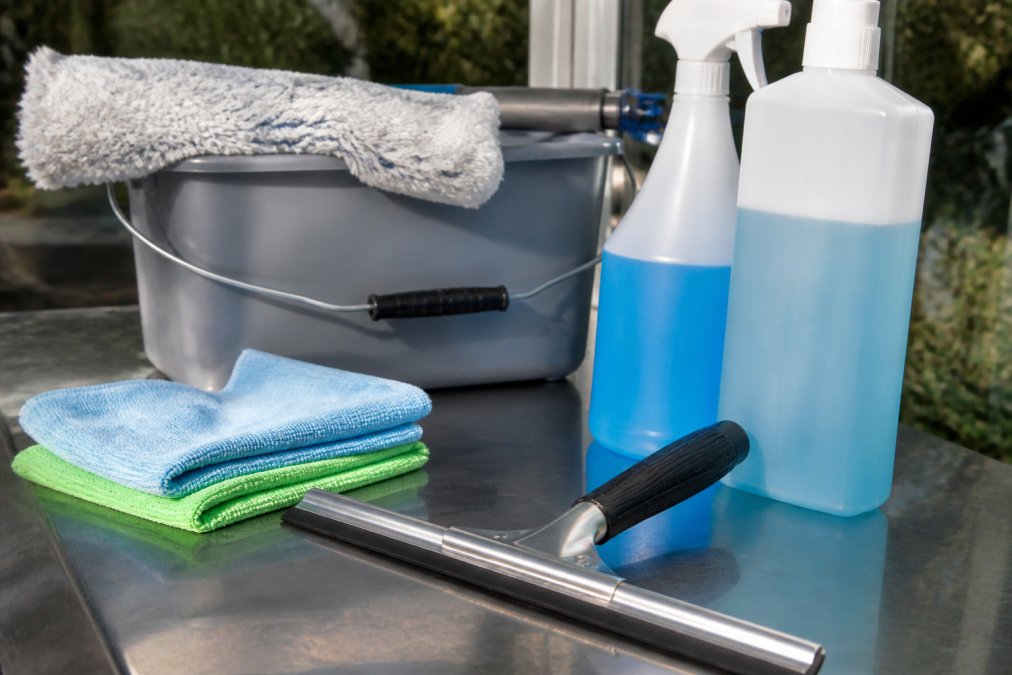
A squeegee is a flat blade mounted on a handle, designed to remove water and cleaning solution from glass in a single stroke. Quality matters enormously. Cheap rubber hardens over time and starts leaving lines within a few weeks. Professional-grade rubber remains supple for months and maintains a sharp edge.
Blade width ranges from 20cm to 45cm. Wider blades cover more area per stroke but require more control. Narrower blades suit intricate windows or frames with many divisions. Most professionals carry two squeegees, a wider one for large panes and a narrower one for detailed work.
The handle design affects comfort and control. An ergonomic handle reduces strain during repetitive use.
A squeegee blade that’s dull or damaged will leave lines even with perfect technique. Replace blades every 2-3 months of regular use, or immediately if you notice streaking.
Microfibre Cloths and Drying Materials
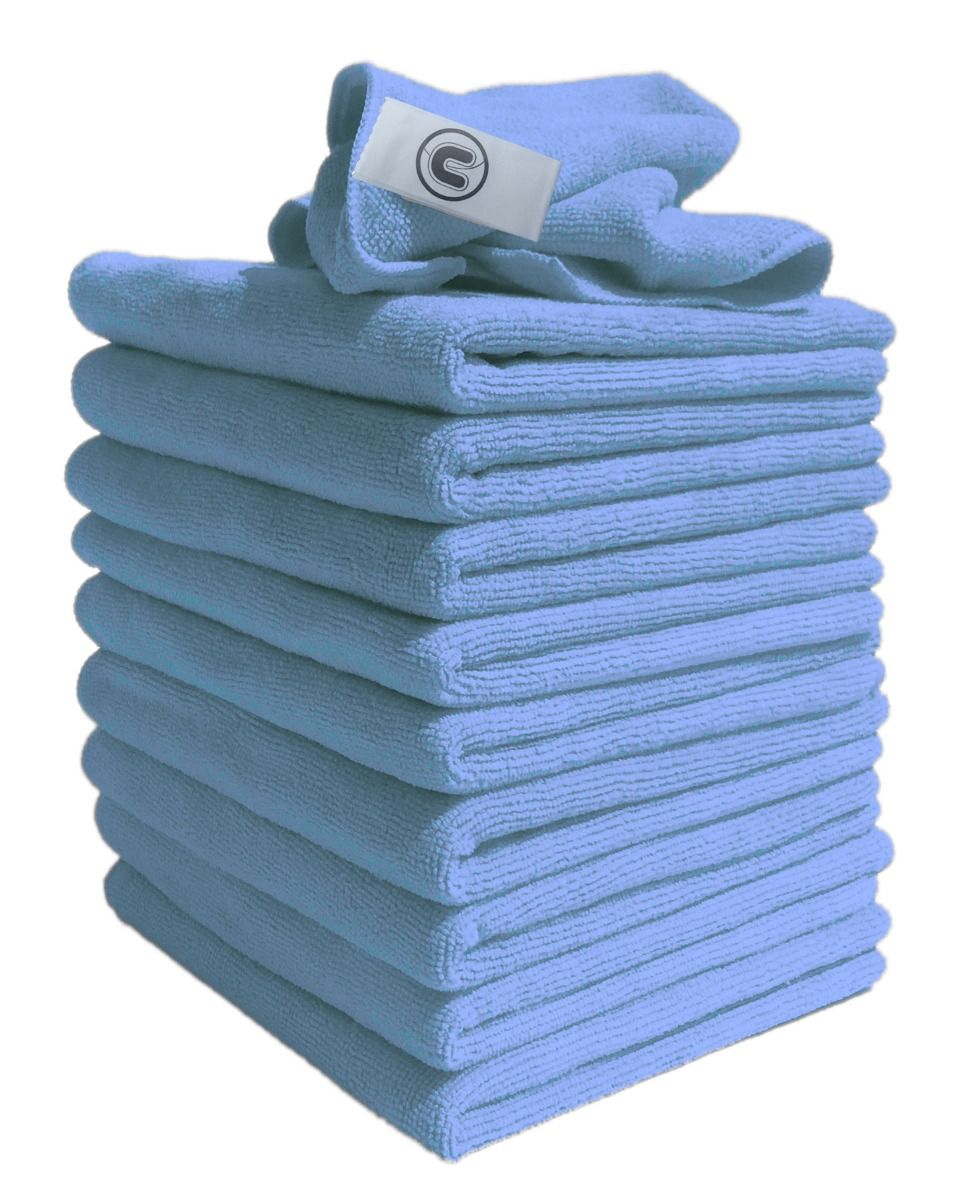
After the squeegee removes most water, a cloth dries the remaining moisture and polishes the glass. Microfibre cloths are superior to cotton for window cleaning. The synthetic fibres trap dust and water more effectively and can be washed and reused hundreds of times. The [Blue Professional Microfibre Cleaning Cloths 40x40cm 10 Pack](https://www.discountedcleaningsupplies.co.uk/dcs-microfibre-cleaning-cloths-40x40cm-blue-10-pack) from Discounted Cleaning Supplies deliver streak-free results and withstand industrial washing.
Cotton cloths work if you choose the right type. Lint-free cotton, such as the Robert Scott Cotton Glass Cloth, is woven tightly enough to avoid shedding. Standard kitchen towels leave fibres and are false economy.

A cloth that’s 40x40cm is large enough to cover a significant area but small enough to handle without awkwardness.
Window Cleaning Buckets and Containers
A bucket for window cleaning isn’t the same as a general-purpose bucket. Professional window cleaning buckets are typically rectangular rather than round. The flat sides prevent tipping and provide a stable edge for resting the squeegee. A handle that’s strong and positioned for safe carrying matters, especially when climbing stairs or working on site.
The DCS 12 Litre Blue Utility Bucket is designed specifically for this purpose. At 12 litres, it holds enough solution for a substantial job without becoming unwieldy. The rectangular shape and durable ABS plastic construction mean it won’t tip easily or crack under regular use.
Some professionals use two buckets, one for cleaning solution and one for rinsing the squeegee. This two-bucket method prevents dirty water from contaminating your cleaning solution and speeds up work.
Extendable Window Cleaner Poles: Reach and Safety
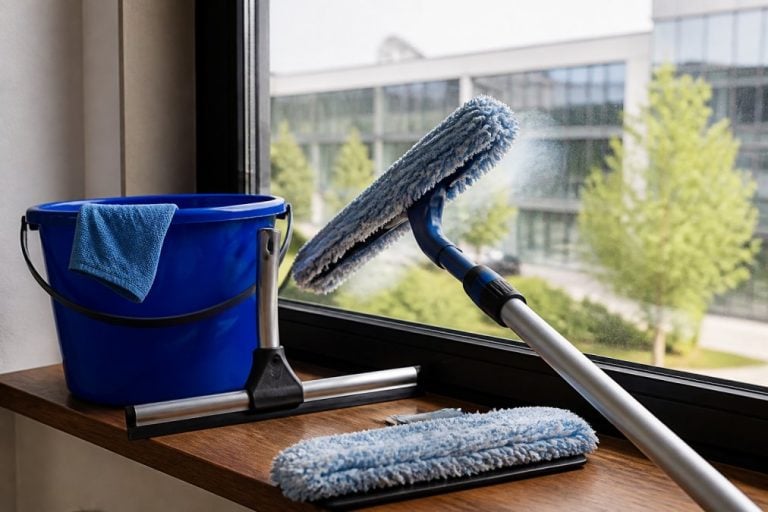
An extendable window cleaner pole extends your reach without requiring a ladder. Water-fed poles are typically made from carbon fibre or fibreglass. Carbon fibre is lighter and more durable but costs more. Fibreglass is heavier but more affordable and still reliable.
The weight of the pole matters significantly. A 10-metre pole that weighs 3kg is manageable for most people. One that weighs 6kg becomes exhausting during an 8-hour shift. Carbon fibre poles typically weigh 30-40% less than fibreglass equivalents, which justifies the higher cost for professional users.
The brush head at the end of the pole is where water flows and where the actual cleaning happens. Soft bristles work well on most glass. Harder bristles suit heavily soiled windows or textured glass. The brush head should be replaceable so you can upgrade or change the bristle type without replacing the entire pole.
Connection points between sections need to be secure. Twist-lock connections are more reliable than push-fit designs. Start with a shorter pole (8 metres) if you’re new to water-fed systems, and extend to longer poles as your technique develops.
Window Cleaning Solution: Choosing the Right Formula
The cleaning solution is as important as the equipment. Most professional window cleaning solutions are concentrates. You mix them with water at a specific ratio, typically 1 part concentrate to 10-20 parts water. This approach is economical and allows you to adjust strength for heavily soiled windows.
Hard water areas require different solutions than soft water areas. Hard water contains minerals that leave spots even after squeegee and cloth work. Some professional solutions include water softening agents or chelating compounds that prevent mineral deposits. If you’re in a hard water area, choose a solution designed for that purpose.
The solution should cut through grease and dirt without leaving a film. Quality solutions are formulated to rinse clean without leaving residue.
For water-fed pole systems, the solution is even more critical. You’re applying it through a brush head and rinsing with water, so the solution needs to be effective at loosening dirt without requiring aggressive scrubbing.
Test any new solution on a small area first. Apply it to a few windows, allow it to work for a minute or two, squeegee or rinse it off, and dry the glass. If the result is clear and streak-free, the solution works for your conditions.
Comparing Window Cleaning Kit Types: Pros and Cons
| Kit Type | Best For | Reach | Cost | Learning Curve | Speed |
|---|---|---|---|---|---|
| Bucket & Squeegee | Ground-floor windows, small properties | Up to 2m | Low | Minimal | Moderate |
| Magnetic System | Conservatory roofs, skylights | 1-2m | Moderate | Low | Moderate |
| Water-Fed Pole | Commercial buildings, multi-storey properties | 8-15m | High | Moderate to high | Fast |
Bucket and squeegee kits suit homeowners and small cleaning operations. The initial cost is low, and you can start working immediately with minimal training. The limitation is reach; you’ll need a ladder for anything above 2 metres.
Magnetic systems excel in niche situations where external access is restricted or dangerous. They’re faster than bucket and squeegee for skylights and conservatory roofs. They’re impractical for standard exterior windows where ladder access is available.
Water-fed poles dominate professional window cleaning because they eliminate ladder work and increase speed dramatically. Once you develop proficiency, this system is the most efficient for buildings with multiple storeys or extensive glazing.
For a facilities manager maintaining a 5-storey office building, water-fed poles save time and reduce safety risks. For a homeowner cleaning their own house, a bucket and squeegee kit is practical and economical. For a cleaning contractor managing multiple residential properties, the choice depends on the mix of work.
Choosing the Right Kit for Your Needs
Start by answering three questions: What are you cleaning? How frequently? What’s your budget?
Single-storey residential or small commercial premises (offices under 3 storeys): A bucket and squeegee kit is sufficient and economical. You’ll need a bucket, squeegee, cloths, and cleaning solution. This approach works for cleaning every 2-4 weeks.
Multi-storey buildings or large properties: A water-fed pole system becomes cost-effective if you’re cleaning regularly. If you’re cleaning less frequently than monthly, stick with a bucket and squeegee plus a ladder for upper windows.
Specialist applications (conservatory roofs, skylights, windows in restricted-access locations): A magnetic system is worth considering.
Commercial cleaning companies managing multiple properties: Invest in a water-fed pole system and maintain a backup bucket and squeegee kit for situations where the pole isn’t practical. This gives you flexibility and ensures you can always complete work efficiently.
Consider durability when choosing components. A cheap squeegee that lasts 2 months costs more per use than a professional squeegee that lasts 12 months. Quality buckets don’t crack or degrade. Professional cloths withstand repeated washing. Calculate the cost per use over a year, not just the upfront price.
Recommended Products
For bucket and squeegee cleaning, the DCS 12 Litre Blue Utility Bucket is purpose-built for window cleaning. The rectangular design prevents tipping, and the durable ABS plastic resists cracking. Pair it with the Blue Professional Microfibre Cleaning Cloths 40x40cm 10 Pack for streak-free drying. For those preferring cotton, the [Robert Scott Cotton Glass Cloth](https://www.discountedcleaningsupplies.co.uk/cotton-glass-cloth-white-pack-of-10-robert-scott-tm2030) delivers lint-free results and withstands industrial washing.
These products are recommended because they’re designed for professional use, withstand repeated use without degrading, and deliver consistent results. Discounted Cleaning Supplies stocks a complete range of window cleaning equipment and solutions, with free UK delivery on all orders and access to over 8,000 cleaning products. Whether you’re setting up your first window cleaning kit or upgrading equipment for a commercial operation, Discounted Cleaning Supplies provides professional-grade products at competitive prices with knowledgeable support to help you choose correctly.
Choosing the right window cleaning kit depends on understanding what you’re cleaning and how often. A bucket and squeegee kit works perfectly for most residential cleaning. Water-fed poles make sense for commercial properties and frequent cleaning. Discounted Cleaning Supplies helps you select the components that match your actual needs, avoiding unnecessary expense whilst ensuring professional results. Browse the full range of window cleaning equipment and solutions and get started with products built for durability and performance.
Frequently Asked Questions
What should be included in a professional window cleaning kit?
A complete professional window cleaning kit includes a squeegee with replaceable blade, microfibre cloths or lint-free polishing cloths, a bucket with handle, and quality window cleaning solution. For higher windows, add an extendable pole. Many professionals also include a spray bottle for applying solution and a chamois or drying cloth. The specific items depend on whether you're cleaning residential windows, commercial facades or high-rise buildings.
What is the best window cleaning solution for streak-free results?
Streak-free results depend on both the solution and technique. Use a quality window cleaning solution mixed at the correct concentration, apply it with a squeegee in one smooth motion, and dry with microfibre cloths or a lint-free cloth. Microfibre is particularly effective because its fine fibres trap dust and grease without leaving streaks. Always use distilled water if your tap water is hard, as mineral deposits cause streaking. Test your solution on a small area first.
Are water-fed pole systems better than traditional window cleaning kits?
Water-fed pole systems offer distinct advantages: they reach higher windows safely without ladders, reduce physical strain, and work well on large commercial properties. However, they require more investment and regular maintenance of the pump and filtration system. Traditional kits are more affordable, portable and suitable for residential work and smaller properties. The best choice depends on your property type, window height, frequency of cleaning and budget. Many professionals use both systems for different jobs.
How do I choose an extendable window cleaner pole for safety?
Choose an extendable window cleaner pole based on maximum reach (typically 3-6 metres for domestic use), weight (lighter poles reduce arm fatigue), and material (aluminium offers a good balance of strength and weight). Ensure the pole has a secure locking mechanism between sections to prevent collapse. Check that any attached squeegee or brush head is firmly secured. For commercial or high-access work, verify the pole meets relevant safety standards and always follow safe working at height practices.
What cleaning products do I need for a window cleaning kit?
You'll need a quality window cleaning solution, which may be concentrated (mixed with water) or ready-to-use. Microfibre cloths are essential for streak-free drying. Some professionals add a separate glass cleaner for final polishing. If using a water-fed pole system, you'll also need a water filter and purification system. Always check that any chemicals comply with UK labelling regulations. Avoid newspaper or paper towels as they leave fibres and residue on glass.
This article was written using GrandRanker