Commercial vs Domestic Cleaners: Key Differences Explained
Table of Contents
- What Is the Difference Between Commercial and Domestic Cleaners?
- Commercial Cleaning Equipment and Professional Cleaning Standards UK
- Domestic Cleaning Products UK: What Homeowners Actually Need
- Health and Safety Regulations Cleaning UK: Compliance Standards
- Training and Expertise: Commercial vs Domestic Cleaners
- Environmental Impact and Sustainability in Commercial vs Domestic Cleaning
- Cost, Contracts and Service Models
- Conclusion
Last Updated: July 31, 2026
What Is the Difference Between Commercial and Domestic Cleaners?
Commercial cleaning operates under entirely different regulatory frameworks, uses specialist equipment, requires specific certifications, and demands approaches that would be impractical or unsafe in a domestic setting. Household products sold in supermarkets often lack the efficacy, durability, or compliance standards needed for high-traffic commercial environments.
The distinction shapes everything: the chemicals used, frequency of service, training required, liability insurance, scheduling patterns, and ultimately cost. A domestic cleaner might use a standard household vacuum and multipurpose spray. A commercial cleaner operates industrial-grade machinery, follows COSHH regulations, and maintains detailed cleaning logs. Understanding these distinctions helps you make informed decisions and avoid costly mistakes.
Scope and Scale of Cleaning Operations
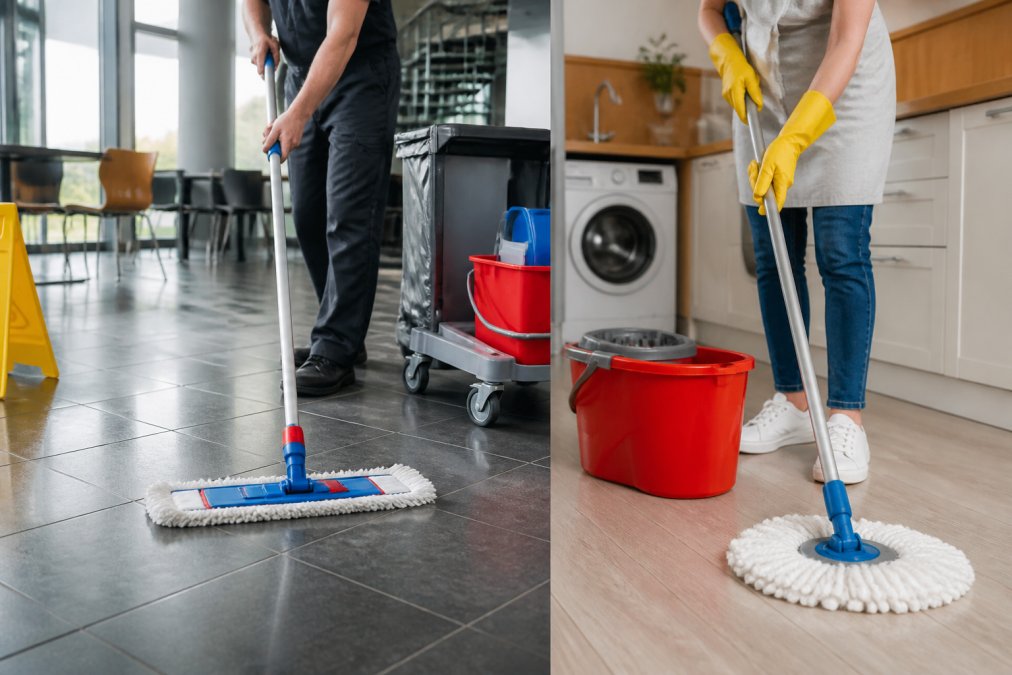
Commercial cleaning operations handle environments of vastly greater complexity and scale than domestic settings. An office building might require daily attention to multiple floors, hundreds of workstations, communal areas, washrooms, kitchens, and specialist spaces. A single commercial contract often encompasses thousands of square metres and involves coordinated teams working to precise schedules.
Domestic cleaning focuses on individual homes or small residential properties, typically limited to kitchens, bathrooms, bedrooms, and living areas. The frequency patterns differ too: commercial premises often require cleaning multiple times per week or daily, depending on foot traffic and industry standards. Domestic homes typically see weekly or fortnightly cleaning.
| Aspect | Commercial Cleaning | Domestic Cleaning |
|---|---|---|
| Typical area | 500-10,000+ sq metres | 50-300 sq metres |
| Frequency | Daily to 3× weekly | Weekly to fortnightly |
| Team size | Multiple cleaners, coordinated | 1-2 cleaners |
| Scheduling | Fixed, contracted times | Flexible, client preference |
| Scope | Specialist spaces, multiple zones | General living areas |
Frequency and Scheduling Patterns
Commercial cleaning operates on rigid, contracted schedules because operational continuity matters. An office must be cleaned before staff arrive, during lunch breaks, or after closing to avoid disrupting work. A hospital cannot schedule deep cleans during patient care hours. A retail environment needs floor maintenance between trading periods to prevent slip hazards. These schedules are documented in service level agreements and treated as non-negotiable commitments.
Domestic cleaning follows the household’s rhythm. A family might request a weekly Tuesday afternoon clean, or shift it to Thursday if plans change. Seasonal variations also differ: commercial cleaning often increases during winter months when dirt ingress rises, or before major events.
Commercial Cleaning Equipment and Professional Cleaning Standards UK
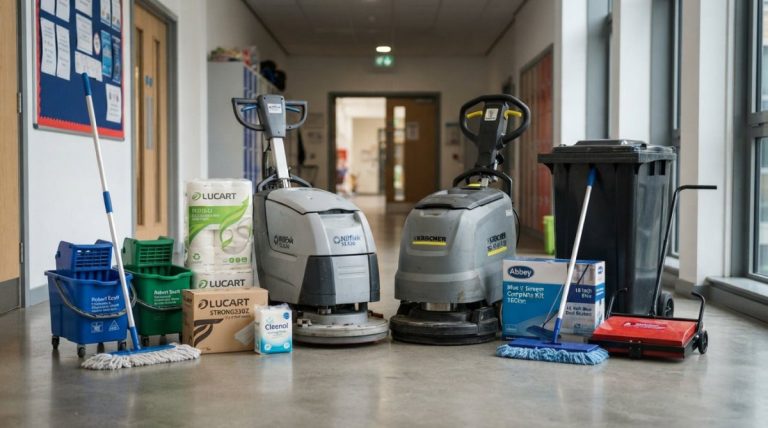
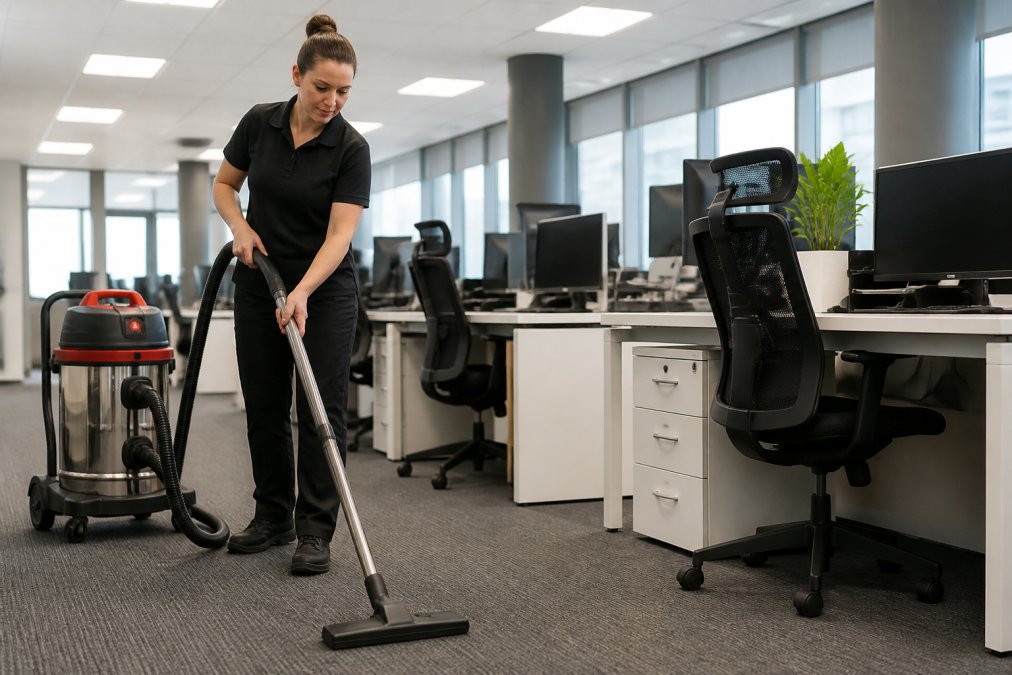
Industrial-grade machinery separates professional commercial cleaning from domestic approaches. Commercial models feature powerful motors, large capacities, and industrial-duty construction designed for eight-hour daily operation. The Numatic NRV240-11 Commercial Henry Dry Vac exemplifies this difference, with reinforced components and extended service intervals that justify the investment across multiple properties.
Commercial cleaning also demands compliance with UK health and safety regulations. The Health and Safety at Work etc. Act 1974 and the Control of Substances Hazardous to Health Regulations 2002 (COSHH) establish mandatory standards for chemical handling, storage, personal protective equipment (PPE), and risk assessment. Commercial cleaners must maintain safety data sheets for every chemical, train staff on hazard identification, and document compliance procedures.
Professional cleaning standards in the UK also reflect industry expectations. The British Institute of Cleaning Science (BICSc) sets voluntary standards for commercial cleaning operations, covering staff competency to quality assurance. Many commercial contracts specify BICSc accreditation or equivalent as a requirement.
Industrial-Grade Machinery and Tools
Commercial equipment handles high-traffic environments that would wear out domestic machinery within weeks. Industrial floor scrubbers clean and dry large areas simultaneously, something impossible with a standard mop and bucket. Carpet extraction machines remove deep-seated dirt and moisture, preventing mould growth in busy office carpets. High-pressure washers clean external surfaces and remove stubborn staining from paving and facades.
A commercial floor scrubber covers 1,500-2,000 square metres per hour. Manual mopping might achieve 200-300 square metres in the same time. Over a year, this efficiency gap translates to substantial labour cost savings.
Specialist Solutions for High-Traffic Areas
High-traffic commercial spaces demand products formulated for durability and rapid drying. Standard household floor cleaner might leave a residue that becomes slippery under heavy foot traffic. Professional-grade floor cleaners evaporate quickly, resist re-soiling, and maintain slip resistance even in wet conditions.
A commercial washroom in an office building might serve 500 people daily. Standard toilet cleaners, hand soaps, and paper products deplete rapidly. Commercial washroom suppliers provide bulk dispensers, high-capacity cartridges, and products formulated for frequent use without degrading fixtures.
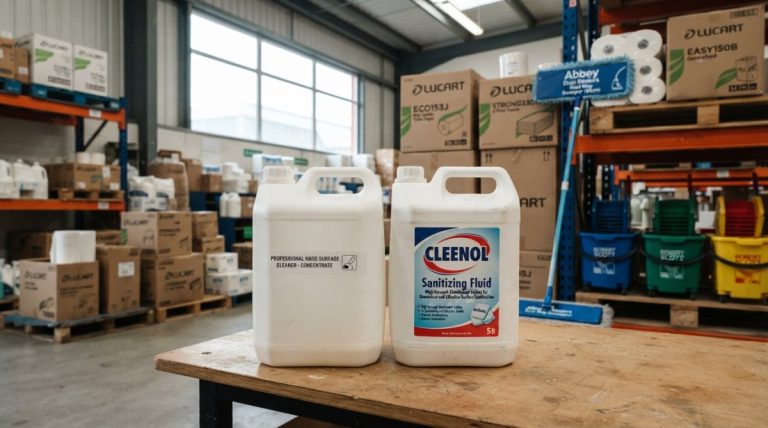
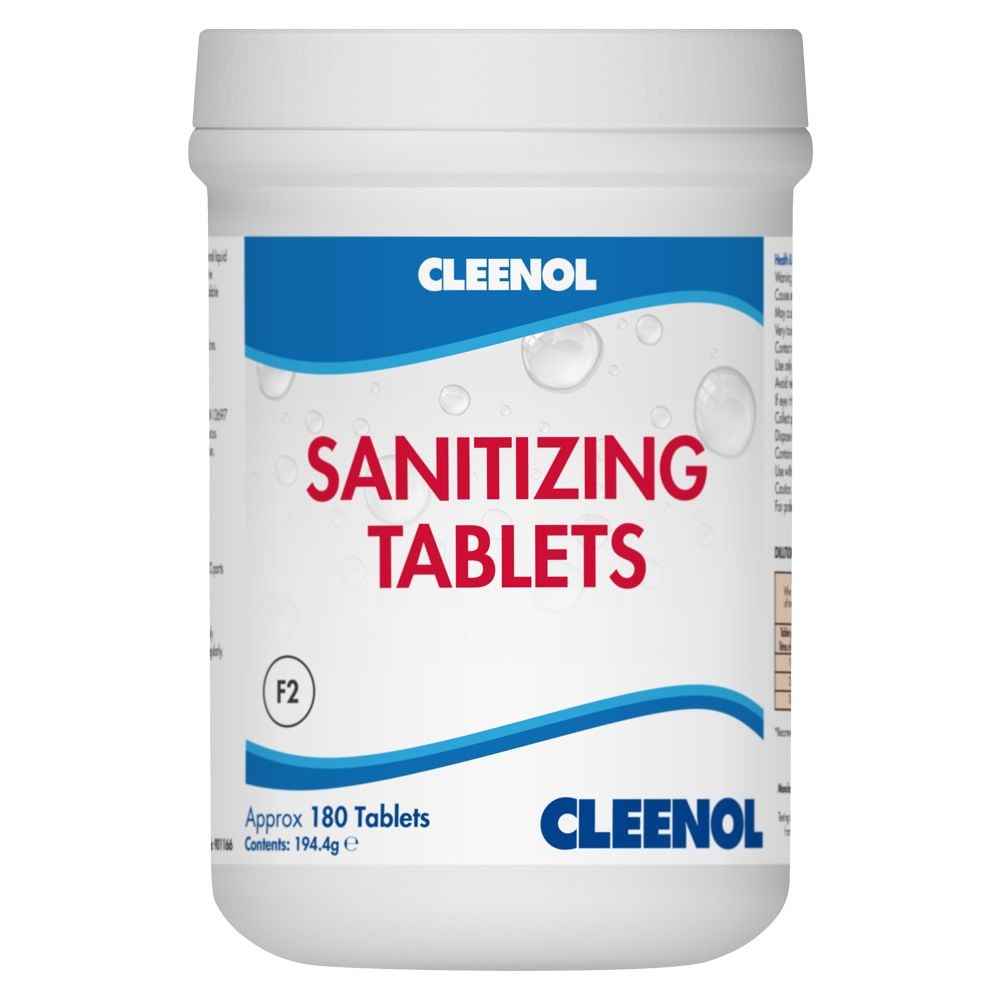
Healthcare facilities and food service operations face even more specialised demands. COSHH regulations require disinfectants proven effective against specific pathogens. Food preparation areas must use products that meet food safety standards. Discounted Cleaning Supplies stocks professional-grade products from manufacturers like Cleenol and Steri-7, formulated specifically for these commercial demands. Cleenol Sanitizing Tablets provide consistent chlorine disinfection at precise concentrations, exactly what healthcare and food service operations need.
Domestic Cleaning Products UK: What Homeowners Actually Need
Houshold cleaning products sold in UK supermarkets prioritise convenience and visual appeal over the technical specifications that commercial operations require. A bottle of Flash or Dettol works perfectly well for a family home because the cleaning demands are modest and the cost is low enough to replace regularly if efficacy declines.
Domestic cleaning products typically contain lower concentrations of active ingredients than commercial equivalents. This reflects the intended use: occasional cleaning of lightly soiled surfaces. A homeowner buys a 500ml bottle of bathroom spray. A commercial cleaner buys a 5-litre concentrate that dilutes to create dozens of bottles, reducing per-unit cost dramatically.
Household Products vs Professional-Grade Alternatives
The distinction matters most when homeowners attempt to use domestic products in semi-commercial settings. A small office of 10 people might seem like a domestic space, but if it’s occupied 40+ hours per week, the cleaning demands exceed what household products can sustain. A standard multipurpose cleaner might leave streaks on glass or create residue on hard floors. A professional-grade glass cleaner dries streak-free even at scale.
Cost-per-use tells the real story. A 500ml bottle of household cleaner might last two weeks in a domestic home but three days in a commercial setting. A 5-litre concentrate delivers equivalent cleaning power to 10-15 household bottles. For any operation using significant volumes of cleaning products, professional-grade alternatives deliver dramatically better value.
Professional-grade products also address specific challenges that household cleaners can’t. Limescale buildup in commercial washrooms requires descaling products formulated to remove mineral deposits without damaging fixtures. Grease accumulation in commercial kitchens demands degreasers with high alkalinity and surfactant concentration. Disinfection in healthcare settings requires products proven effective against MRSA, C. difficile, and other pathogens.
Health and Safety Regulations Cleaning UK: Compliance Standards
The regulatory landscape differs fundamentally between commercial and domestic cleaning. Commercial operations must comply with multiple UK laws and regulations; domestic users are encouraged to follow best practice but face no legal enforcement.
Commercial Compliance and Liability
The Health and Safety at Work etc. Act 1974 places legal duties on employers and self-employed people to ensure the health, safety, and welfare of employees and anyone affected by their work. For a commercial cleaning company, this means:
- Maintaining a health and safety policy
- Conducting risk assessments for every cleaning task
- Providing appropriate training and supervision
- Supplying suitable PPE (gloves, eye protection, respiratory protection where needed)
- Maintaining safety data sheets for all hazardous substances
- Documenting incidents and near-misses
- Reviewing and updating procedures regularly
COSHH regulations require that hazardous substances be assessed, labelled, and handled according to their specific hazards. Commercial cleaners must understand these classifications and train staff accordingly.
Employers’ liability insurance is a legal requirement for any business with employees. Public liability insurance, though not legally mandated, is practically essential because cleaning operations work in client premises and might cause damage or injury.
Domestic Safety and Best Practice
Domestic cleaning guidance emphasises practical safety without legal enforcement. The HSE recommends ventilation, avoiding mixing chemicals, wearing gloves, and keeping products away from children. These are sensible precautions, but compliance is voluntary.
Commercial settings can’t operate this way. A cleaner working eight hours daily in enclosed spaces faces cumulative chemical exposure that requires proper ventilation, respiratory protection, and medical monitoring in some cases.
Training and Expertise: Commercial vs Domestic Cleaners
The skill and knowledge required differs substantially between sectors. A domestic cleaner needs basic cleaning techniques, time management, and interpersonal skills. A commercial cleaner requires formal training, understanding of chemical safety, knowledge of different surface types, and ability to work to documented standards.
Professional Qualifications and Certifications
The UK cleaning industry offers formal qualifications for commercial cleaners. The BICSc Level 1 Award in Cleaning and Support Services provides foundational knowledge of cleaning techniques, chemical safety, and customer service. Level 2 and Level 3 qualifications develop supervisory and management skills. These qualifications are recognised across the industry and often specified in commercial contracts.
Health and Safety qualifications are also common. A Level 2 Award in Health and Safety in the Workplace ensures cleaners understand regulatory requirements and can identify hazards. COSHH awareness training is mandatory for anyone handling hazardous substances commercially.
Specialist certifications exist for specific sectors. Healthcare cleaning requires additional training in infection control and pathogen identification. Food service cleaning demands knowledge of food safety regulations. Domestic cleaners typically learn through experience and informal mentoring.
Specialist Knowledge for Different Environments
Commercial cleaners must understand how different environments require different approaches. An office requires attention to technology that shouldn’t be saturated with liquid. A hospital demands knowledge of cross-contamination prevention and pathogen elimination. A food service area requires understanding of food safety and allergen control. A retail environment needs rapid turnaround without disrupting trading.
Environmental Impact and Sustainability in Commercial vs Domestic Cleaning
The environmental consequences of cleaning differ by scale and product choice. Commercial operations use vastly greater volumes of chemicals, water, and energy, amplifying their environmental footprint. However, commercial operators also have stronger incentives and regulatory pressure to adopt sustainable practices.
Chemical Usage and Waste Management
A domestic household might use 10-20 litres of cleaning products annually. A commercial office building might use 500-1,000 litres. A hospital or industrial facility could use several thousand litres. This volume difference means commercial operations have significant environmental impact through chemical manufacturing, packaging waste, and wastewater contamination.
Commercial operations often generate concentrated chemical waste that requires specialist disposal. Some chemicals can’t be diluted and poured away; they must be collected by licensed waste contractors. This regulatory requirement ensures proper treatment and prevents environmental harm.
Water consumption also differs dramatically. A domestic household might use 50-100 litres for all cleaning tasks weekly. A commercial office might use 500-1,000 litres daily. This drives investment in more efficient cleaning methods and water recycling systems.
Sustainable Practices for Both Sectors
Commercial operators increasingly adopt sustainable practices because regulatory pressure, client expectations, and cost savings align. Many businesses now specify environmentally certified cleaning products, reduced-chemical protocols, and water-efficient equipment. Microfibre cloths, which require minimal chemical use, have become standard in professional cleaning because they’re more effective and cheaper long-term than disposable alternatives.
Domestic users can adopt similar practices at smaller scale. Microfibre cloths work as well in homes as in offices. Concentrated products reduce packaging waste. Choosing products with environmental certifications supports sustainable manufacturing.
Cost, Contracts and Service Models
The financial models underlying commercial and domestic cleaning reflect their different operational structures.
Commercial Contracts and Long-Term Agreements
Commercial cleaning operates on formal contracts specifying services, frequency, standards, response times, and pricing. A typical contract might run 12-36 months, with pricing fixed or subject to annual review. The contract documents exactly what will be cleaned, how often, and to what standard. This clarity protects both parties and enables the cleaning company to plan staffing and resources.
Commercial contracts often include service level agreements (SLAs) specifying response times for issues, quality standards, and remedies if standards aren’t met. Long-term contracts benefit both parties: the cleaning company can invest in training and equipment knowing they have stable revenue, whilst the client gets consistent service and pricing predictability.
Domestic Pricing and Flexible Scheduling
Domestic cleaning pricing is typically hourly or flat-rate per visit. The pricing is simple, transparent, and flexible; clients can adjust frequency or duration based on budget.
Domestic arrangements are usually informal, sometimes just a verbal agreement or a text message confirming the next visit. There’s no written contract, no SLA, and no formal dispute resolution process. Flexibility is a key selling point: a family can request an extra clean before a dinner party, or skip a week if finances are tight.
Understanding the difference between commercial and domestic cleaners reveals why these sectors operate so differently. Commercial cleaning is regulated, formalised, equipment-intensive, and focused on efficiency at scale. Domestic cleaning is flexible, personal, product-focused, and driven by individual preferences. Neither approach is inherently better; they’re optimised for their different contexts.
For businesses evaluating cleaning contractors or facilities managers selecting products, recognising these differences ensures you choose appropriately. Professional-grade equipment and products exist because commercial demands genuinely require them. For homeowners, understanding what commercial cleaners use helps identify which professional products might improve your own cleaning results.
Recommended Products
NRV240-11 Commercial Henry Dry Vac with Kit NA1 240V (Numatic)
If you’re managing a commercial space or want professional-grade equipment for extensive cleaning, this industrial vacuum delivers the durability and power required. It represents genuine value for operations that need equipment lasting years of daily use. The 8-litre capacity and strong construction handle high-traffic areas without the wear that affects domestic machines. You can purchase the NRV240-11 Commercial Henry Dry Vac with Kit NA1 240V for £129.99.
Cleenol Sanitizing Tablets – Pack of 180
For healthcare facilities, food service operations, or any environment requiring reliable disinfection, these tablets provide consistent chlorine concentration. Each tablet yields precise available chlorine, meeting the efficacy standards that domestic cleaners simply can’t match. The tablets dissolve in water for convenient preparation without handling concentrated liquid bleach. A pack of 180 Cleenol Sanitizing Tablets is available for £11.04.
Heavy Duty Black Refuse Sacks 80L (200 Pack)
Whether you’re operating a commercial facility or managing substantial household waste, these refuse sacks offer reliable containment at professional grade. The heavy-duty construction prevents tearing and leakage that cheaper alternatives allow, reducing cleanup time and mess, a genuine advantage in high-volume environments. A box of 200 Heavy Duty Black Refuse Sacks 80L costs £14.79.
These products from Discounted Cleaning Supplies represent the professional-grade approach that separates effective commercial and domestic cleaning. Stock them, and you’re investing in reliability, compliance, and results that standard household products simply can’t deliver.
Frequently Asked Questions
What is the main difference between commercial and domestic cleaners?
Commercial cleaners are trained professionals who use industrial-grade equipment, specialist cleaning solutions, and follow strict health and safety regulations to maintain large-scale facilities like offices, hospitals, and schools. Domestic cleaners focus on residential properties using standard household products and methods. Commercial cleaners typically work on contract with defined schedules and compliance requirements, whilst domestic cleaners offer flexible, personalised service for individual homes.
Can the same cleaner do both commercial and domestic cleaning work?
Technically yes, but it’s not ideal. Commercial cleaning requires specific training, insurance, and compliance knowledge that differs significantly from domestic work. A person trained in commercial standards may find domestic cleaning straightforward, but someone without commercial experience lacks the expertise for high-traffic areas, specialist equipment operation, and regulatory compliance. Most professional cleaners specialise in one sector to maintain quality and meet industry standards.
What health and safety regulations cleaning UK does commercial cleaning require?
Commercial cleaning in the UK must comply with the Health and Safety at Work etc. Act 1974, COSHH (Control of Substances Hazardous to Health) Regulations 2002, and relevant industry-specific standards. Commercial cleaners must use hazard-labelled products under GB CLP (Classification, Labelling and Packaging) regulations, maintain detailed records, and carry appropriate liability insurance. Domestic cleaning has no formal regulatory requirements, though best practice still applies for safe product use and storage.
Are different tools and products used in commercial and domestic cleaning?
Yes, significantly. Commercial cleaning uses industrial-grade equipment like commercial Henry vacuums, high-pressure systems, and specialist chemical solutions designed for heavy-duty use in high-traffic areas. Domestic cleaning typically uses standard household products and basic equipment. Commercial products are formulated for efficiency, durability, and compliance with professional standards, whilst domestic products prioritise convenience and safety for general household use. Professional-grade equipment is built to withstand daily, intensive use across large spaces.