Heat Resistant Oven Gloves Buying Guide for UK Homes
Table of Contents
- Why Good Oven Gloves Matter for Kitchen Safety
- Types of Heat Resistant Oven Gloves Explained
- What Makes an Oven Glove Heat Resistant
- Long Oven Gloves for BBQ and Extended Wrist Coverage
- Machine Washable Oven Gloves: Care and Durability
- Choosing the Right Size, Fit and Dexterity
- Common Mistakes When Buying Heat Resistant Oven Gloves
- How to Care for and Maintain Your Oven Gloves
Last Updated: July 22, 2026
Why Good Oven Gloves Matter for Kitchen Safety
Thermal burns from cooking remain one of the most common domestic injuries in UK kitchens. When handling trays at 200°C or reaching into a hot oven, the difference between adequate protection and poor protection can mean the difference between safety and a trip to accident and emergency. A good pair of heat resistant oven gloves must balance three competing demands: insulation thick enough to protect against serious burns, flexibility enough to grip properly, and durability enough to withstand repeated washing and use.
Many people grab whatever’s hanging on the kitchen hook without considering whether it offers genuine thermal protection. Understanding what makes oven gloves actually heat resistant helps homeowners make choices that genuinely reduce risk.
Types of Heat Resistant Oven Gloves Explained
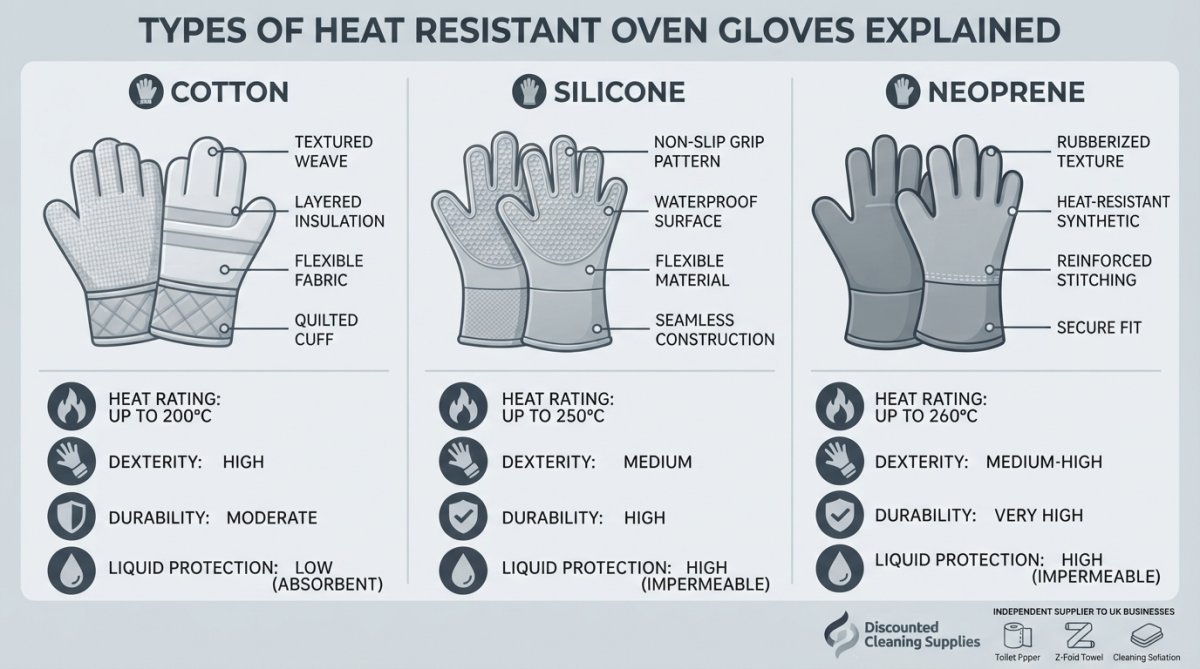
Not all glove types perform equally. The material construction determines how well a glove protects, how long it lasts, and how practical it is for everyday kitchen use.
Cotton Oven Gloves
Cotton remains the traditional choice for kitchen protection. Cotton fibres naturally insulate against heat and are comfortable to wear for extended periods. A well-constructed cotton glove with multiple layers or quilted padding provides reliable protection for everyday oven use up to around 200°C.
Most quality cotton oven gloves are machine washable when cared for in accordance with the manufacturer’s instructions, and don’t retain odours as readily as some synthetic materials. For homeowners who bake regularly or use their ovens several times weekly, quality cotton gloves remain practical. The limitation is durability under extreme conditions and reduced protection at very high temperatures.
Silicone Oven Gloves
Silicone oven gloves provide excellent non-slip grip even when wet, addressing a genuine weakness of traditional cotton gloves. The material doesn’t absorb water and typically withstands temperatures up to 250°C or beyond.
The primary advantage is grip. When handling a wet roasting tin or a glass dish fresh from the sink, silicone’s grip properties significantly reduce the risk of dropping hot items. Silicone also resists staining and odour absorption better than cotton.
However, silicone gloves tend to be bulkier than cotton, reducing dexterity when handling smaller items. Some users report the glove surface can feel uncomfortably warm even when not touching the heat source directly. Silicone gloves are generally more expensive than equivalent cotton options.
Neoprene and Aramid Fibre Options
Neoprene offers a middle ground between cotton and silicone. It provides good insulation, is flexible and comfortable to wear, and typically resists temperatures up to 240°C. The material is less bulky than silicone whilst offering better heat resistance than basic cotton.
Aramid fibres, commonly known by brand names like Kevlar, represent the premium end of heat-resistant materials. These synthetic fibres withstand extreme temperatures, often rated to 260°C or higher, and are used in professional kitchens. For homeowners, aramid fibre gloves are typically overkill unless you’re doing serious grilling work.
The practical choice for most UK households falls between quality cotton and neoprene. Silicone works well if grip is your primary concern.
What Makes an Oven Glove Heat Resistant
A truly heat resistant oven glove must insulate, preventing heat transfer to your skin, and resist degradation when exposed to high temperatures repeatedly.
Insulation and Thermal Protection Materials
Insulation works by trapping air within the material structure. Air is an excellent insulator because it conducts heat very poorly. Cotton’s effectiveness comes from the air trapped within its fibrous structure. Silicone’s high temperature rating comes from both its material properties and the way manufacturers layer it with insulating backing materials.
The thickness of the insulation matters directly. A thin cotton glove offers less protection than a thick quilted one made from the same material. Double-sided or double-layer gloves, which have insulation on both the palm and the back of the hand, provide better overall protection than single-sided options.
Temperature Ratings and Safety Standards
Temperature ratings should always be considered alongside information provided by the manufacturer. In the UK and Europe, heat-resistant protective gloves are commonly tested to standards such as EN 407, although domestic oven gloves are not always certified to this standard. Rather than relying solely on a temperature claim, look for clear product information, quality construction and a reputable manufacturer.
A glove rated to 250°C doesn’t mean it’s equally safe at 250°C as it is at 150°C. Heat resistance degrades as temperature increases. For UK household use, choose gloves rated 20-30°C above your typical cooking temperature. If you usually cook at 180°C, gloves rated to 210°C provide a safety margin.
Wrist coverage becomes critical when working with open flames or reaching deep into ovens. A standard oven glove typically extends 5-7 inches up the forearm. For everyday oven use, this provides adequate protection. For grilling or reaching into the back of a deep oven, longer gloves extending 10-14 inches offer significantly better protection against burns to the wrist and lower forearm.
Long gloves are particularly valuable for BBQ work. When working over charcoal or gas flames, heat radiates upward and outward. Extended-length gloves wrap your wrist and lower forearm in insulation, reducing risk substantially. The trade-off is reduced dexterity.
| Glove Type | Typical Length | Best For | Heat Rating |
|---|---|---|---|
| Standard oven glove | 5-7 inches | Everyday oven use | 200-220°C |
| Extended wrist glove | 10-14 inches | Grilling and deep oven access | 220-250°C |
| Forearm-length glove | 14+ inches | Professional or extreme-temperature use | 240°C+ |
Features to Look For: Grip, Comfort, Flexibility, Insulation and Machine Washability
Grip quality directly affects kitchen safety. Cotton gloves provide reasonable grip when dry but can become slippery when wet. Silicone excels at wet-grip performance, which is why many people prefer silicone for handling freshly washed cookware or items with condensation.
Comfort during use affects safety. If a glove is uncomfortable, too hot, too restrictive, or causing pressure points, you’re more likely to remove it when you shouldn’t. A glove that feels good in your hand is a glove you’ll actually use consistently.
Flexibility matters for handling different cookware types. Quality oven gloves balance insulation with flexibility, they’re thick enough to protect but supple enough to allow natural hand movement.
An oven glove that can’t be easily cleaned becomes a hygiene liability. Most quality oven gloves are machine washable. Cotton gloves typically tolerate standard 40°C machine washing without degradation. A well-made glove with reinforced seams and quality insulation can handle 200+ washes before noticeable degradation occurs.
Machine washability also affects practicality. Gloves that require hand washing are less likely to be cleaned regularly, which creates hygiene issues. Easy machine washing encourages proper cleaning habits and extends glove lifespan.
Common Mistakes When Buying Heat Resistant Oven Gloves
Most purchasing mistakes stem from prioritising the wrong attributes or misunderstanding what “heat resistant” actually means.
The first common mistake is buying based solely on temperature rating. A glove rated to 300°C sounds impressive, but if you never cook above 200°C, that rating is irrelevant. Matching the rating to your actual cooking needs is more sensible than chasing the highest number.
The second mistake is underestimating the importance of fit and comfort. An uncomfortable glove gets removed and set aside, leaving you unprotected when you need it most.
The third mistake is assuming all “machine washable” gloves are equally durable. Some gloves degrade significantly after 20-30 washes. Others maintain integrity for 200+ washes. Construction quality, seam reinforcement, material thickness, and backing quality determine actual durability.
The fourth mistake is buying single-layer gloves when double-layer alternatives are available at similar prices. Double-sided insulation provides substantially better protection and comfort.
The fifth mistake is ignoring grip performance. A glove that protects against heat but allows items to slip is dangerous.
How to Care for Oven Gloves
Proper care extends glove lifespan and maintains their protective properties. Most oven gloves should be washed after every use or at minimum weekly if used regularly.
Machine washing at 40°C is appropriate for most cotton and synthetic gloves. Use standard detergent, nothing abrasive or bleach-based, which can damage insulation materials. Always air dry.
For stubborn stains, pre-soaking in warm water with detergent for 15-30 minutes helps loosen residue before washing. Avoid scrubbing aggressively, which can damage seams or wear through material.
Store clean, dry gloves in a cool, dry location. Damp storage promotes mildew growth and material degradation. Inspect gloves regularly for signs of wear. When insulation becomes visibly compressed or gloves no longer feel as protective, replacement is overdue. Most household gloves need replacing every 2-4 years depending on use frequency.
Final Buying Advice
Selecting the right heat resistant oven gloves means prioritising actual protection over marketing claims. The best glove for your household balances adequate temperature rating for your cooking needs, comfortable fit that encourages regular use, reliable grip that prevents dropped items, and durable construction that withstands regular washing.
Test gloves before buying when possible. A glove that feels good in your hand is a glove you’ll use consistently. Consider your specific cooking patterns and match your choice to your actual needs rather than buying based on impressive specifications you’ll never use.
Quality construction matters more than material type. A well-made cotton glove outperforms a poorly constructed silicone one. Examine seams, insulation thickness, and backing material quality. These details determine how long a glove actually lasts and how well it protects.
Remember that oven gloves are consumable items. Even excellent gloves eventually degrade and need replacement. When you notice reduced protection or visible wear, replacing gloves is a worthwhile safety investment. If you’re looking to stock up or need to order in bulk, Discounted Cleaning Supplies offers over 8,000 cleaning and kitchen products (https://www.discountedcleaningsupplies.co.uk/) with free UK delivery on all orders, making it convenient to keep quality oven gloves on hand.
Why We Recommend the Abbey Jolly Molly Double Oven Gloves
The Abbey Jolly Molly Double Oven Gloves represent excellent value for UK households seeking reliable, everyday heat protection. These heavy-duty cotton gloves feature a double-sided design that provides insulation on both the palm and back of the hand, a feature that significantly improves comfort and protection compared to single-layer alternatives.
The extended wrist coverage protects your forearms when reaching into ovens or handling large cookware, addressing a genuine safety gap that standard-length gloves leave exposed. With a heat resistance rating up to 250°C, these gloves handle everyday oven work and grilling without compromise. The cotton construction offers superior comfort for extended wear, and the gloves are fully machine washable, making them practical for regular kitchen use.
These gloves suit baking, roasting, grilling, and BBQ work equally well. The quality construction means they’ll withstand regular washing and maintain their protective properties across many wash cycles, genuine value for a household that uses oven gloves frequently.
View the Abbey Jolly Molly Double Oven Gloves
Frequently Asked Questions
What makes an oven glove heat resistant?
Heat resistant oven gloves use specialised materials like cotton batting, silicone, neoprene, or aramid fibres to create insulation barriers that slow heat transfer. The thickness and density of these materials determine how effectively they protect your hands. Quality oven gloves have multiple layers—an outer protective shell and inner insulation—which work together to maintain a safe temperature at the skin surface, even when handling cookware at 200°C or higher.
Are silicone or cotton oven gloves better for high temperatures?
Both materials offer different advantages. Silicone gloves provide excellent grip and water resistance, making them ideal for damp kitchen environments and grilling. Cotton gloves offer superior breathability and flexibility, making them better for extended wear and detailed kitchen work. For pure heat resistance, both can handle 200–250°C when properly constructed. Choose silicone for durability and grip, or cotton for comfort and flexibility during everyday cooking and baking.
How do I choose the right size oven glove?
Oven gloves should fit snugly without restricting movement or blood flow. Measure your hand from wrist to fingertip and check the manufacturer’s sizing guide. A glove that’s too loose reduces dexterity and heat protection; one that’s too tight causes fatigue and reduces grip strength. Double oven gloves or mitts offer more coverage but less individual finger control, whilst individual-finger gloves provide better dexterity for handling smaller items like baking trays or grilling utensils.
Can oven gloves be washed in a washing machine?
Many modern oven gloves are machine washable, but always check the manufacturer’s care label first. Machine-washable gloves typically use durable cotton or synthetic materials that withstand regular washing. Wash at 40°C on a gentle cycle and air-dry flat to preserve heat-resistant properties. Avoid tumble drying, as high heat can degrade insulation materials. Regular washing extends the life of your gloves and maintains hygiene, especially in busy kitchens or after frequent use.
How often should I replace my heat resistant oven gloves?
Replace oven gloves when you notice visible wear, thinning patches, tears, or reduced heat protection. With regular use and proper care, quality cotton gloves typically last 12–18 months. Silicone gloves may last longer due to their durability. If your gloves no longer insulate effectively or feel uncomfortable, it’s time for a replacement. Regular inspection after washing helps you catch deterioration early and maintain consistent kitchen safety.
What’s the difference between an oven mitt and an oven glove?
Oven mitts are single-piece coverings that enclose your hand and wrist without individual finger sections, offering maximum insulation and heat protection. Oven gloves have individual fingers or a thumb-and-fingers design, providing better dexterity and grip for precise handling. Mitts are ideal for grabbing large trays or pans; gloves are better for detailed work like adjusting racks or handling smaller items. Both can be equally heat resistant—the choice depends on your cooking style and preference.
Do oven gloves have to meet a safety standard in the UK?
Domestic oven gloves sold for household use are not always certified to a specific heat-resistance standard. Professional heat-resistant gloves used in catering and industrial environments may be tested to EN 407 for protection against thermal risks. For household oven gloves, look for a reputable manufacturer, a suitable temperature rating and always follow the manufacturer’s care and safety instructions.