Window Cleaning Kit: A 2026 Buyer’s Guide
Table of Contents
- What Is a Window Cleaning Kit and Why It Matters
- Traditional vs Water-Fed Pole Systems: Which Window Cleaning Kit Suits You?
- Essential Components of a Professional Window Cleaning Kit
- Professional Window Cleaning Equipment vs Domestic Kits
- Water-Fed Pole Kit Technology and Deionising Filters
- Storage, Organisation and Maintenance of Your Window Cleaning Kit
- Step-by-Step Technique Guide: Achieving Streak-Free Results
- Safety Guidelines for High-Level Cleaning with Window Kits
Window Cleaning Kit: A 2026 Buyer’s Guide
Last Updated: August 1, 2026
Professional window cleaning has transformed significantly over the past decade. Modern techniques now combine traditional squeegee methods with advanced water-fed pole technology. At Discounted Cleaning Supplies, we’ve helped thousands of facilities managers, commercial cleaners, and property owners select the right window cleaning kit for their specific needs. Whether you’re managing a multi-storey office building, maintaining a hospitality venue, or keeping residential windows spotless, understanding your options matters.
What Is a Window Cleaning Kit and Why It Matters
A window cleaning kit is a complete system of tools designed to clean glass surfaces safely and effectively. Rather than improvising with household items, a proper kit combines specialised equipment that works together to deliver professional results consistently.
Effective window cleaning matters significantly. Dirty windows reduce natural light, create poor first impressions for businesses, and indicate broader property neglect. For commercial premises, clean windows directly affect customer perception. Schools, healthcare facilities, and hospitality venues face particular scrutiny. A quality window cleaning kit enables teams to maintain standards across multiple properties without excessive labour costs.
Traditional vs Water-Fed Pole Systems: Which Window Cleaning Kit Suits You?
Choosing between traditional and modern approaches represents the first major decision when selecting a window cleaning kit. Each system has genuine strengths for different applications.
Traditional squeegee-based kits
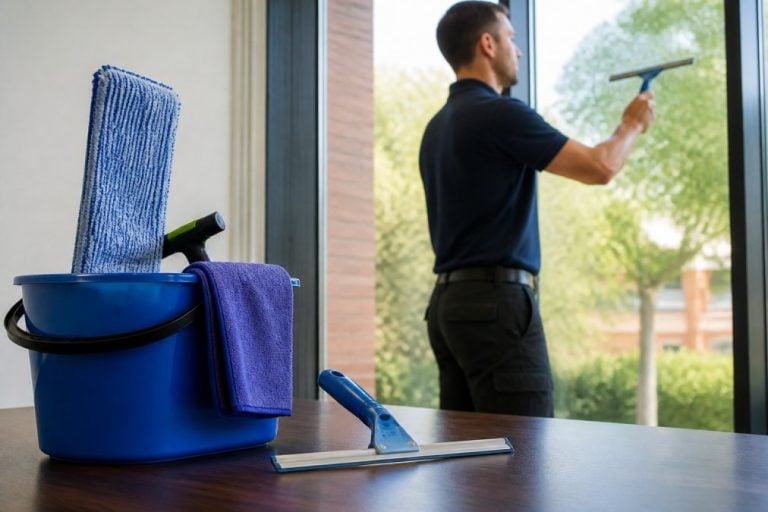
Traditional window cleaning kits centre on the squeegee channel and rubber blade combination. A typical kit includes a bucket, microfibre washer or brush head, squeegee with replaceable rubber blade, and sometimes a window scraper for stubborn deposits. Many commercial cleaners prefer this approach because it requires minimal equipment investment, works reliably on most standard windows, and allows immediate feedback.
The main limitation emerges with high-level access. Reaching upper-storey windows requires ladders or scaffolding, which introduces safety complexity, slows work dramatically, and creates insurance complications. Traditional systems also depend entirely on operator technique. Poor squeegee angle, inconsistent pressure, or inadequate blade sharpness produces streaks and water marks.
For single-storey properties, small retail units, and domestic applications, a traditional window cleaning kit delivers excellent value.
Pure water-fed pole systems
Water-fed pole technology uses purified water delivered through a brush head at the end of a telescopic pole. The pure water, combined with soft brush bristles, removes dirt and mineral deposits. As the water dries naturally, it leaves no residue because pure water contains no dissolved minerals that create streaks.
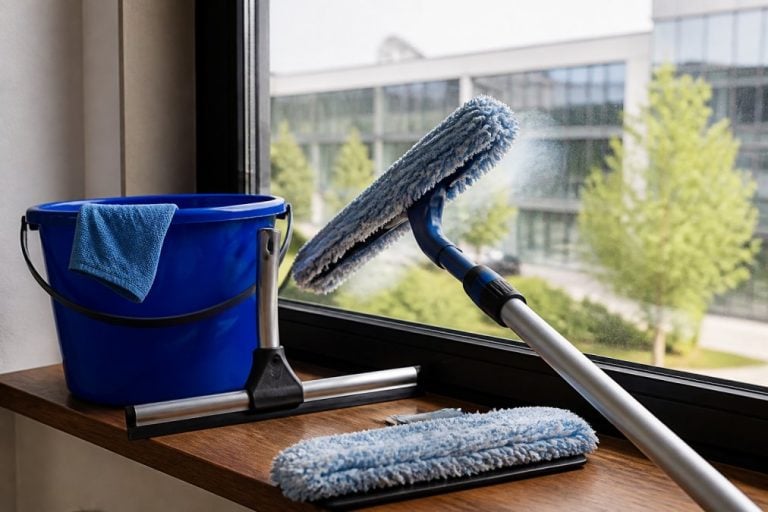
A water-fed pole window cleaning kit includes a telescopic aluminium pole (typically extending 10-20 metres), a brush head with soft bristles, a water supply system, and crucially, a deionising filter that removes minerals from tap water. One operator with a water-fed pole kit can safely clean third or fourth-storey windows from ground level, eliminating ladder safety risks and accelerating work on tall buildings.
The trade-offs are real. Water-fed pole kits cost significantly more than traditional systems. The deionising filters require replacement every 1,000-2,000 litres depending on water hardness, adding ongoing costs. For single-storey work, the complexity and cost often outweigh benefits.
| System Type | Equipment Cost | Best For | Key Advantage | Main Limitation |
|---|---|---|---|---|
| Traditional squeegee kit | £150-£400 | Single-storey, domestic, retail | Low cost, immediate results | Requires ladders for height |
| Water-fed pole kit | £800-£2,500 | Multi-storey, conservatories | Reach without ladders, pure water results | Higher cost, ongoing filter expense |
Essential Components of a Professional Window Cleaning Kit
Understanding what each component does helps you select the right equipment and recognise quality differences between products.
Telescopic handles and pole length selection
The telescopic pole is the foundation of modern window cleaning. Aluminium poles extend smoothly and lock securely at different heights, allowing operators to reach upper windows whilst maintaining control. Poles typically range from 3 metres (for ground-floor work) to 20+ metres (for high-rise access). Most commercial operations invest in poles between 10-15 metres, which covers typical three to five-storey buildings.
Lightweight aluminium construction matters significantly. Professional-grade poles weigh 1.5-2.5 kg per 5-metre section. Over a full working day, this difference accumulates into genuine physical strain. The connection mechanism between sections affects usability. Twist-lock systems require less force to secure and are faster to extend than push-fit designs. Ergonomic grip design with textured rubber or foam reduces hand fatigue during extended shifts.
Squeegee channels and rubber blades
The squeegee channel holds the rubber blade that removes water from glass. Professional channels feature reinforced structure that holds the blade perfectly straight; slight warping causes lines or streaks.
Rubber blade quality determines results directly. Premium blades maintain flexibility and sharpness through hundreds of passes. A quality blade should glide across glass with minimal pressure, removing water cleanly in a single pass. Blade width varies between 25-45 cm, with most commercial operations using 35-40 cm blades as a compromise between coverage and control.
Replacement blades should be easy to fit and affordable. A quality squeegee channel accepts multiple blade types, and replacement blades should cost £3-£8 each.
Microfibre washers and detachable brush heads
The washing stage determines how effectively dirt lifts from glass before the squeegee removes water. Microfibre washers excel because microfibre fibres are much finer than natural cotton, creating more surface area for dirt to cling to. A versatile window cleaning kit includes both loose and dense versions for different soiling levels.
For water-fed pole systems, brush heads replace traditional washers. These feature soft nylon or natural bristles that gently agitate glass whilst pure water flows through. Quality brush heads maintain bristle integrity through thousands of uses. Detachable heads matter for practicality, allowing you to swap between different types without tools.
Professional Window Cleaning Equipment vs Domestic Kits
The difference between professional and domestic window cleaning equipment extends beyond price. Professional-grade gear is engineered for daily use across varied conditions, whilst domestic kits suit occasional use on familiar surfaces.
Professional equipment prioritises durability, speed, and consistency. Components are manufactured to tighter tolerances, materials withstand repeated use, and design focuses on operator efficiency. For facilities managers responsible for multiple properties, professional-grade equipment pays for itself through faster work, fewer breakdowns, and superior results. For homeowners cleaning their own windows occasionally, a domestic kit delivers excellent value. Professional manufacturers also stock replacement parts indefinitely, whilst domestic kit manufacturers often discontinue products.
Water-Fed Pole Kit Technology and Deionising Filters
Water-fed pole systems depend on purified water to deliver their signature streak-free finish. Understanding how this technology works helps you maintain equipment properly and troubleshoot when results decline.
How pure water systems work
Tap water contains dissolved minerals: calcium, magnesium, and other compounds. When tap water dries on glass, these minerals remain as white streaks or spots. Pure water contains no minerals. When pure water dries, nothing remains; the glass looks spotless.
A deionising filter removes these minerals using resin beads that exchange minerals for hydrogen and hydroxide ions. As tap water passes through the filter, mineral ions attach to the resin whilst pure water emerges from the outlet. This process continues until the resin becomes saturated with minerals and loses effectiveness.
The water supply system connects to the deionising filter and delivers purified water to the brush head. Some systems use gravity-fed backpack tanks (typically 15-25 litres) that the operator carries. Others connect to van-mounted reservoirs (50-200 litres) with a pump that pressurises water to the pole. Most professional systems deliver 5-15 litres per minute, with 8-12 litres per minute ideal for most commercial work.
Maintenance and filter replacement
Deionising filters require regular monitoring to maintain results. Filter capacity depends on water hardness. In soft-water areas, a filter might process 2,000 litres before requiring replacement. In hard-water areas, the same filter might only handle 1,000 litres. Many operators monitor filter performance by observing results; when streaks reappear after weeks of perfect finishes, filter replacement is due.
Filter replacement is straightforward. Most systems use cartridge filters that slide out and clip in, no tools required. Empty tanks at the end of each working day to prevent algae growth and mineral accumulation. Clean tanks monthly with a brush and rinse thoroughly.
Storage, Organisation and Maintenance of Your Window Cleaning Kit
Proper storage extends equipment life dramatically and ensures everything is ready when needed.
Store poles horizontally on a wall-mounted rack or in a purpose-built holder. Vertical storage stresses the connection points and can cause bending. Keep squeegees with blades facing upward, never pressing against hard surfaces. Store blades in a protective sheath or cover.
Microfibre washers should be stored clean and dry. Wash them thoroughly after each use, squeeze out excess water, and hang them to air-dry completely before storage. For water-fed pole systems, empty tanks completely and allow them to dry before storage.
Check equipment regularly for damage. Inspect poles for dents or bends; these weaken structure and can cause failure under load. Examine squeegee channels for warping or cracks. Test blade sharpness by running a thumb gently across the edge (carefully, sharp blades cut easily). Replace blades immediately if they feel dull or show visible wear.
Keep a simple inventory of replacement parts. Stock extra squeegee blades, microfibre washers, and hose connectors. For water-fed systems, always have a spare deionising filter available.
(https://www.discountedcleaningsupplies.co.uk/equipment/dusters-dust-beaters/microfibre-cloths), bucket, and brush heads arranged on a clean work surface with natural lighting | section:Essential Components of a Professional Window Cleaning Kit]
Step-by-Step Technique Guide: Achieving Streak-Free Results
Technique matters as much as equipment. The best window cleaning kit produces poor results in unskilled hands, whilst experienced operators achieve excellent finishes with modest equipment.
Surface preparation and detergent application
Begin by removing loose dirt and debris. Use a soft brush or microfibre cloth to wipe away dust, cobwebs, and loose grime. This prevents particles from scratching glass during the main cleaning process.
For heavily soiled windows, apply detergent solution before the main cleaning. Mix a small amount of window cleaning detergent with water, typically a few drops per bucket. Apply the detergent solution with a microfibre washer, using circular motions to work it into the glass. Allow the solution to sit for 30-60 seconds on particularly dirty windows.
Warm water dissolves deposits slightly better than cold water, particularly for greasy films. However, in sunny conditions, warm water evaporates quickly, potentially leaving marks. Cool water works reliably in all conditions.
For water-fed pole systems, the pure water flow itself often suffices without additional detergent. Add detergent only for heavily soiled surfaces or mineral-encrusted glass. Rinse thoroughly after applying detergent to remove all residue.
Squeegee technique and finishing touches
The squeegee stroke determines whether results are streak-free or marred by lines. Use smooth, confident strokes without hesitation or back-and-forth motions. Each stroke should be in one direction, typically top-to-bottom or left-to-right.
Start at the top corner of the window. Pull the squeegee downward in a smooth motion, keeping the blade at approximately 45 degrees to the glass. Maintain even pressure throughout the stroke; too light and water remains, too heavy and the blade chatters. Overlap strokes slightly to ensure complete coverage, about 5 cm on each pass to eliminate gaps.
The final pass is crucial. Make one last downward stroke from top to bottom, using slightly lighter pressure. This removes excess water from the blade and leaves the glass as dry as possible. Many professionals finish with a microfibre cloth to wipe any remaining droplets from the edges and sill.
Technique improves with practice. Most operators develop excellent technique within 50-100 hours of practice. Weather affects technique requirements. On hot, sunny days, water evaporates quickly, so work faster and rinse more frequently. On cool, overcast days, water evaporates slowly, allowing more time for careful work. Rain prevents outdoor window cleaning.
Safety Guidelines for High-Level Cleaning with Window Kits
Working at height introduces risks that proper technique and equipment help mitigate.
For traditional squeegee-based kits using ladders, follow the Work at Height Regulations 2005. Ladders are only safe for work up to approximately 2 metres. Above this height, use scaffolding, mobile elevated working platforms (MEWPs), or other fall protection systems.
When using ladders, ensure they’re positioned on level ground, at the correct angle (approximately 75 degrees from horizontal), and secured at the top if possible. Never overreach; move the ladder rather than stretching sideways. Keep at least three points of contact with the ladder at all times. Wear appropriate footwear with good grip, and never work on ladders during high winds or wet conditions.
For water-fed pole systems, the primary risk is loss of balance from the pole’s weight and the operator’s focus being elevated. Maintain firm footing on level ground. Be aware of trip hazards; hoses, water tanks, and uneven surfaces create fall risks. Wear appropriate footwear with good grip.
When working near electrical hazards (power lines, external electrical equipment), maintain safe distances. Most electrical safety guidance recommends at least 2-3 metres from overhead power lines.
Use appropriate personal protective equipment (PPE). Safety glasses protect against splashes and debris. Gloves protect hands from sharp edges and cold water. For extended water-fed pole work, consider protective clothing that sheds water rather than absorbing it.
Assess weather conditions before starting. High winds make poles difficult to control and increase fall risk. Rain makes surfaces slippery and reduces visibility. Never work at height during electrical storms.
For commercial operations, ensure workers have appropriate training and that equipment is regularly inspected for safety. Defective poles, damaged squeegees, or worn safety equipment should be removed from service immediately.
Recommended Products
Selecting the right window cleaning kit depends on your specific requirements, but certain products consistently deliver excellent results across varied applications.
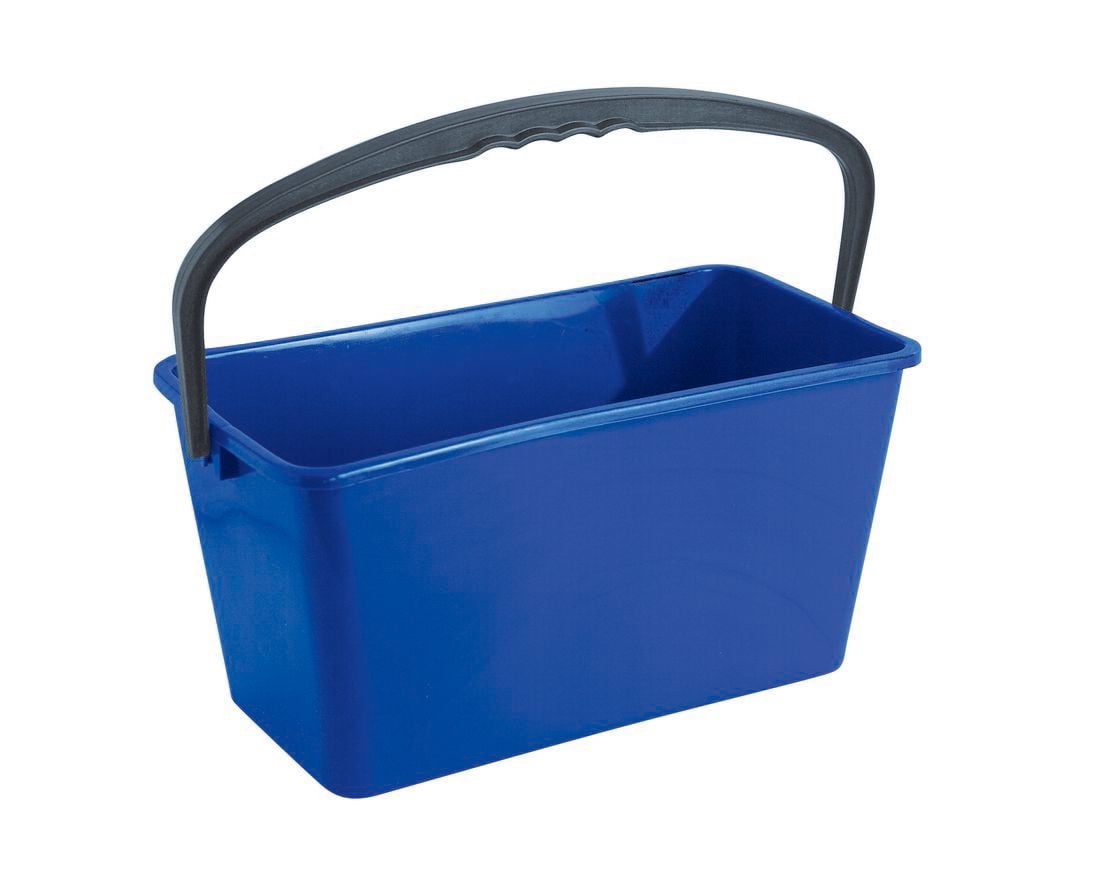
The Discounted Cleaning Supplies Window Cleaning Bucket provides a durable, practical base for any traditional squeegee kit. Made from premium ABS plastic with a comfortable handle, this 12-litre bucket accommodates all standard cleaning tools and withstands daily commercial use. The rectangular design suits window work better than round buckets, and the strong construction means it lasts through years of service. It is available for £11.93.
For achieving streak-free finishes, Robert Scott Cotton Glass Cloths represent exceptional value. These lint-free cloths are trusted by catering professionals and window cleaners alike for polishing glass to a professional sparkle. The 50cm x 76cm size suits most window work, and the pack of 10 ensures you always have clean cloths available. Machine washable at 40°C, these cloths deliver dozens of uses per cloth. A pack of 10 is available for £11.20.

Discounted Cleaning Supplies Microfibre Cleaning Cloths provide the foundation for effective water removal and polishing. These professional-grade 40x40cm cloths feature ultra-fine microfibre that traps dust and grease, delivering smear-free results on glass and other surfaces. Highly absorbent and reusable, they represent excellent value for facilities managing multiple properties. A pack of 10 is available for £7.40.

These products work together to form the foundation of an effective window cleaning system, whether you’re using traditional squeegee methods or water-fed pole technology. Discounted Cleaning Supplies stocks over 8,000 cleaning products with fast UK delivery, ensuring you can source everything needed for professional-grade window cleaning without juggling multiple suppliers. With 30-day business credit accounts available, bulk purchasing becomes straightforward for facilities managers and commercial cleaning operations.
Frequently Asked Questions
What should a good window cleaning kit include?
A complete window cleaning kit needs a telescopic pole (typically 3-6 metres), a squeegee with replaceable rubber blade, a microfibre washer or brush head, and a bucket. Professional kits often include deionising filters for pure water systems, replacement rubber blades, and scrim cloths. The specific contents depend on whether you choose traditional or water-fed systems. For most domestic and commercial use, you'll also want lint-free cloths to achieve streak-free finishes.
What's the difference between traditional and water-fed window cleaning kits?
Traditional kits use a squeegee with a rubber blade to remove water and detergent manually, requiring skill to avoid streaks. Water-fed pole kits use purified water delivered through the pole to a brush head, which loosens dirt without detergent, then the water dries naturally streak-free. Water-fed systems eliminate ladders for high windows and reduce physical effort, but cost more upfront. Traditional kits are cheaper and work well for residential properties and smaller commercial jobs.
How do I choose the right telescopic window cleaner pole length for my property?
Measure the height of your highest windows and add 1-2 metres for safe reach and control. Most residential properties need 4-5 metre poles, whilst commercial buildings may require 6+ metres. Longer poles are heavier and harder to control, so choose the shortest length that safely reaches your windows. Consider whether you'll clean gutters or conservatories, as these may need extended reach. Test the weight and balance before purchasing, as professional-grade poles are heavier but more durable.
Can I use a professional window cleaning kit for high windows without a ladder?
Yes, if you invest in a water-fed pole kit with sufficient reach. Traditional squeegee kits require positioning against the window, making ladders necessary for high windows. Water-fed pole systems deliver water through the pole to a brush head, allowing you to clean from ground level. This is safer, faster, and more efficient for multi-storey buildings, conservatories, and high-level access. However, water-fed systems require access to water and proper filtration, which adds cost.
What maintenance does a window cleaning kit need to stay in good condition?
Rinse poles and squeegees thoroughly after each use to prevent mineral deposits and dirt buildup. Store equipment in a dry place to avoid rust and damage. Replace rubber blades when they show wear or streaking, typically every 3-6 months depending on use. For water-fed kits, replace deionising filters regularly, usually every 2-4 weeks for heavy use. Check hose connections for leaks and inspect brush bristles for damage. Proper maintenance extends equipment life by years and ensures consistent streak-free results.
This article was written using GrandRanker