Top 10 Industrial Floor Scrubbers for Schools: 2026 Guide
Table of Contents
- Why Schools Need Industrial Floor Scrubbers
- Top 10 Industrial Floor Scrubbers for Schools: Quick Comparison
- School Cleaning Regulations UK and Safety Compliance
- Walk-Behind vs Ride-On Scrubbers for Educational Facilities
- Best Walk-Behind Scrubber Dryer for Schools: Selection Criteria
- Floor Scrubber Maintenance Tips for School Environments
- Cost of Industrial Floor Scrubbers UK: Budget and ROI
- High-Traffic Areas in Schools: Cleaning Efficiency and Performance
Last Updated: July 27, 2026
Why Schools Need Industrial Floor Scrubbers
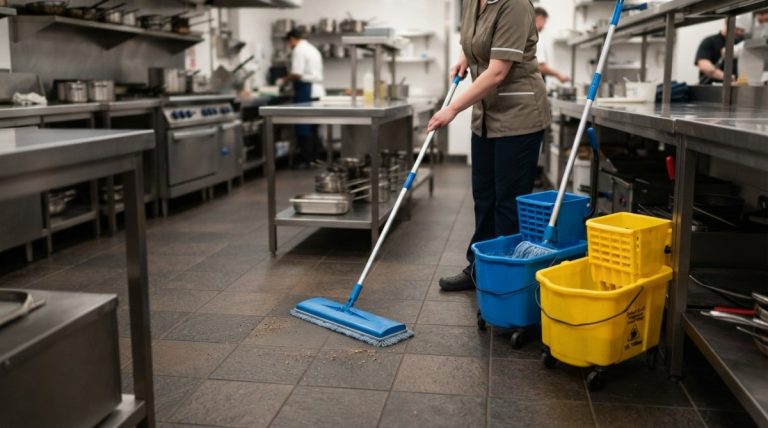
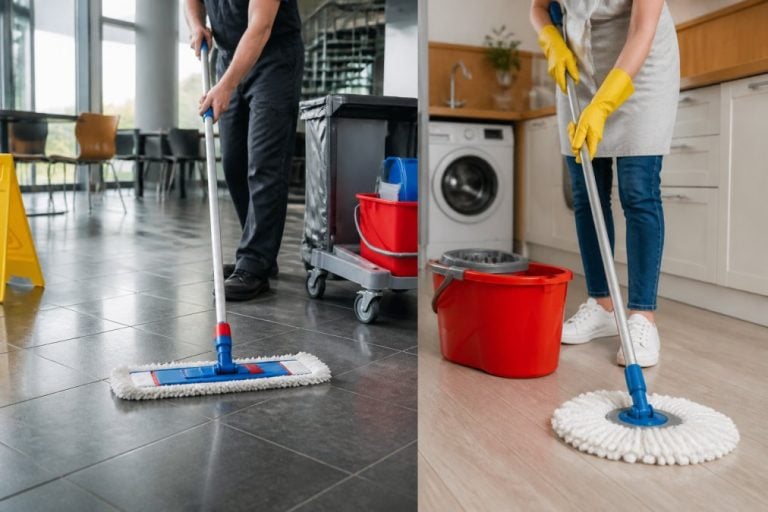
Schools face relentless cleaning demands across hallways, gymnasiums, dining halls, and classrooms. Manual mopping is labour-intensive, time-consuming, and leaves floors wet and potentially slippery for hours. Industrial floor scrubbers clean larger areas in a fraction of the time, reduce water consumption, and leave floors dry and safe within minutes. For facility managers balancing tight budgets with strict hygiene standards, the right scrubber technology transforms cleaning from a resource drain into a strategic asset.
This guide explores key equipment categories, features that matter most in educational settings, compliance requirements, and practical selection criteria to help you choose machines matching your premises, budget, and staffing capabilities.
Top 10 Industrial Floor Scrubbers for Schools: Quick Comparison
| Machine | Type | Best For | Key Advantage |
|---|---|---|---|
| Numatic NuSpeed NR1500S | Walk-behind rotary | General maintenance across hard floors | UK-manufactured, versatile, reliable motor |
| Numatic TT1840G | Walk-behind scrubber-dryer | Mains-powered continuous cleaning | Scrubs and dries in one pass, no battery downtime |
| Numatic 220NX | Cordless compact scrubber | Small spaces, corridors, classrooms | 60-80 minute runtime, fast charging, quiet operation |
| Victor Mini Scrubber | Handheld/extendable | Hard-to-reach areas, skirting boards, stairs | Flexible design, cordless, 45-minute runtime |
| TASKI swingo 455E | Corded compact scrubber | Tight corners, congested layouts | Dual-axle system for manoeuvrability, 430mm width |
| IPC Gansow CT15 B35 | Battery-powered compact | Small to medium areas, sanitary facilities | 15-litre tank, 1225 sq m/hour coverage, versatile |
| Kärcher BD 38/12 C Bp | Battery-powered compact | Quiet operation during school hours | Lithium-ion battery, eco!efficiency mode, low noise |
| Fimap V1 Upright Compact | Upright scrubber-dryer | Diverse floor types, daily maintenance | Covers 60% more space than larger machines in tight areas |
| Comac Vispa 35 | Compact walk-behind | Small rooms, corridors, high-traffic settings | Eco Mode, extremely compact, replaces manual cleaning |
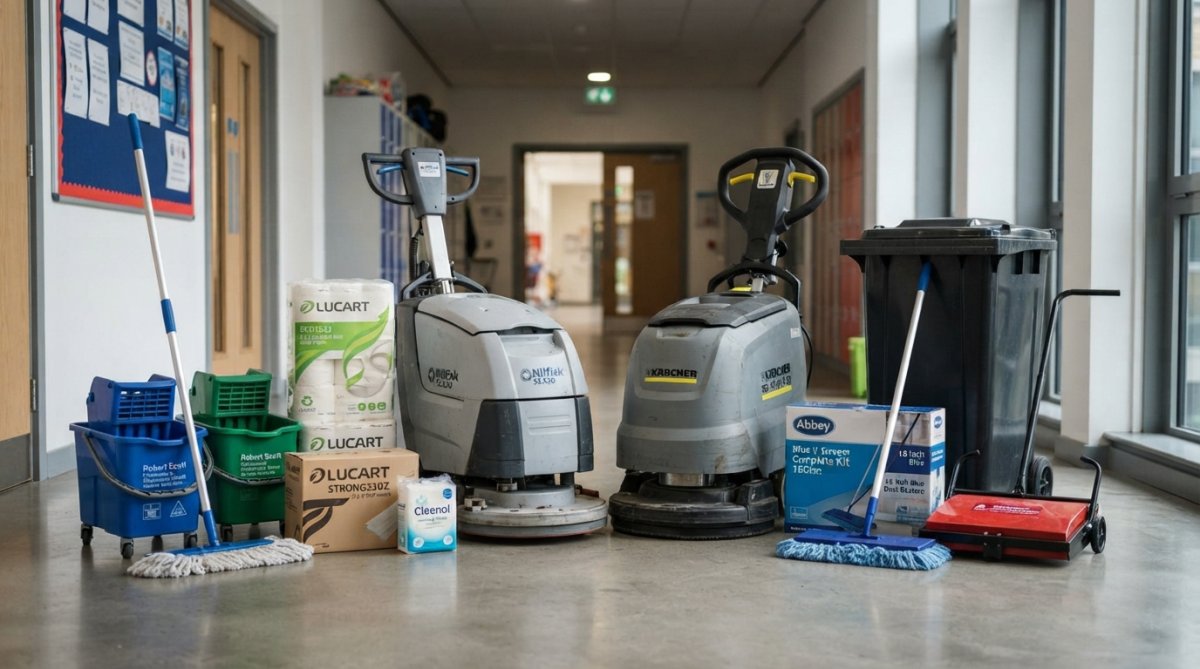
| Abbey Blue V Sweeper | Dry sweeper | Pre-cleaning, dust and debris removal | Cost-effective, no water or power needed, quick deployment |
School Cleaning Regulations UK and Safety Compliance
Schools must comply with the Health and Safety at Work etc. Act 1974 and the Control of Substances Hazardous to Health (COSHH) Regulations 2002. The Health and Safety Executive (HSE) requires that floor surfaces remain clean and safe. Wet floors create slip hazards, making equipment that dries floors immediately valuable. Schools must maintain records of equipment maintenance and operator training, with staff receiving basic instruction on safe operation, cable handling, and water tank safety.
Many schools follow Department for Education guidance specifying that high-traffic areas receive cleaning at least daily, often during or after school hours to minimise disruption. Equipment choice directly impacts whether this schedule is achievable with available staffing.
Wet floors present a serious slip hazard in schools. Ensure any scrubber-dryer you select has effective suction to leave floors dry within 5-10 minutes of cleaning. Residual moisture on stairs or ramps can cause accidents involving children and staff.
Walk-Behind vs Ride-On Scrubbers for Educational Facilities
Walk-behind floor scrubbers dominate school cleaning operations. They offer manoeuvrability in confined spaces, require less operator training, and fit through standard doorways. Ride-on scrubbers are rarely suitable for schools because most buildings lack the continuous open floor space these machines require.
Walk-behind models split into corded (mains-powered) and battery-powered (cordless) options. Corded machines like the Numatic TT1840G provide unlimited runtime but are tethered to power outlets. Battery-powered models like the Numatic TTB1840NX offer freedom of movement without cables. Modern lithium-ion batteries deliver 60-90 minutes of runtime, sufficient for most school cleaning sessions.
For schools with limited space or complex layouts, compact walk-behind models excel. They are engineered for congested environments, with smaller footprints (typically 40-50cm width) that navigate around obstacles.
Schools with multiple buildings benefit from owning both a corded and battery-powered scrubber. Use the corded machine for main corridors and open areas; deploy the battery model for classrooms and areas where cable management is impractical.
Best Walk-Behind Scrubber Dryer for Schools: Selection Criteria
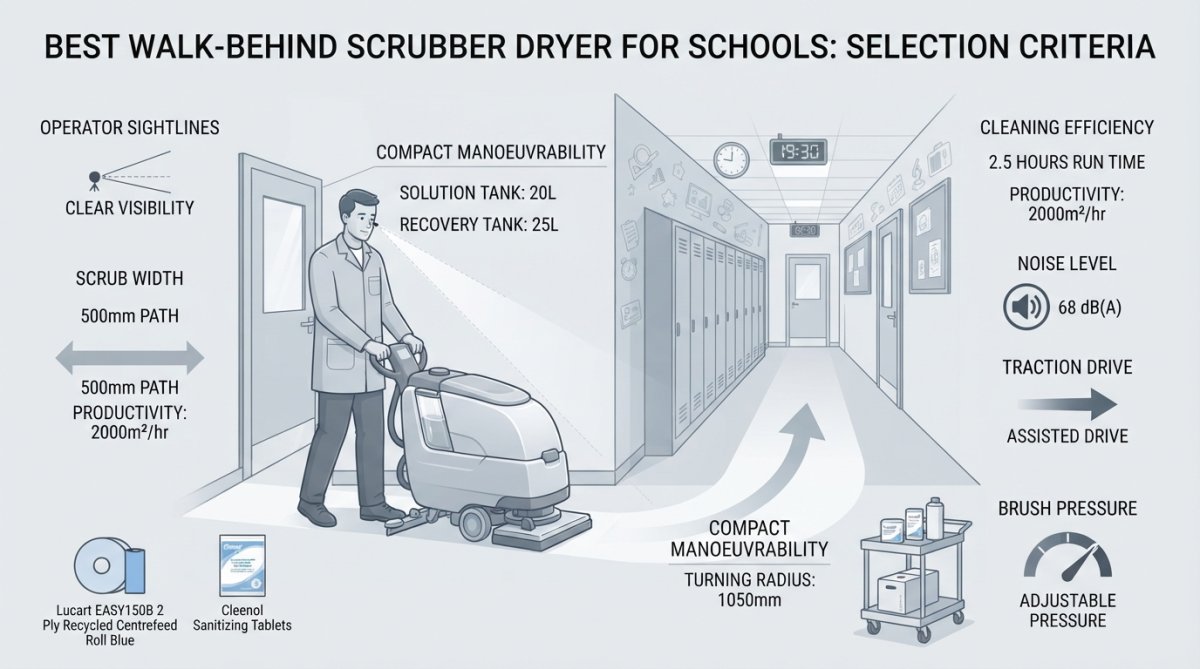
Choosing the right walk-behind scrubber requires evaluating noise levels, ease of use for non-specialist staff, water and chemical tank capacity, runtime, drying performance, and total cost of ownership.
Noise Levels and Operational Hours
Schools operate during occupied hours and after-hours. Equipment noise during school hours disrupts teaching. The Numatic TBL4045 is noted for quiet operation, allowing cleaning during transition periods without significant disruption. Battery-powered machines generally operate quieter than larger industrial scrubbers, providing flexibility for daytime use.
Ease of Use for Non-Specialist Staff
Most schools employ caretakers or cleaning contractors rather than specialist operators. Equipment must be intuitive for staff with varying technical skills. Compact, lightweight machines like the Numatic HFM1515G Hurricane as they are easier to manoeuvre and require less physical effort. The Abbey Blue V Sweeper represents the simplest tool for routine dust and debris removal, no training, no power, no water tanks, yet highly effective for pre-cleaning before wet scrubbing.
Floor Scrubber Maintenance Tips for School Environments
Industrial floor scrubbers require regular maintenance to ensure reliability and extend equipment lifespan.
Daily and Weekly Care Routines
After each use, empty the dirty water tank completely; stagnant water causes odours and bacterial growth. Rinse the tank with fresh water and leave it open to air-dry. Check the solution tank for debris and refill with fresh water and appropriate cleaning solution. Inspect brushes or pads for wrapped hair or string, and remove any entangled material. Check the squeegee blade for cracks or wear; a damaged squeegee leaves floors wet, creating slip hazards.
Weekly maintenance involves checking cable condition (for corded models), inspecting battery contacts (for cordless models), and testing suction performance. If water isn’t extracting properly, rinse or replace the filter according to manufacturer guidance.
Battery and Motor Longevity
Charge battery-powered scrubbers fully after each use rather than leaving them partially charged. Store batteries in cool, dry locations; excessive heat degrades performance. Replace batteries every 3-5 years depending on usage intensity. Ensure machines are stored in dry conditions, not damp basements or outdoor sheds. Replace filters regularly; clogged filters reduce suction and leave floors wetter. Most manufacturers recommend filter replacement every 6-12 months depending on usage.
Cost of Industrial Floor Scrubbers UK: Budget and ROI
A compact walk-behind scrubber-dryer typically costs between £2,000 and £5,000 depending on features and brand. Corded models are generally cheaper than battery-powered equivalents. The Abbey Blue V Sweeper costs under £50, making it an excellent low-cost addition to any school cleaning toolkit.
Labour cost is the dominant factor in school cleaning budgets. A caretaker using a traditional mop and bucket spends 2-3 hours cleaning a 500 square metre corridor. The same corridor cleaned with an industrial scrubber takes 45 minutes. Over a school year, that efficiency gain translates to dozens of hours saved, equivalent to significant salary cost reduction or reallocation of staff time to other facility maintenance tasks.
Industrial scrubbers use 5-10 litres of water per 100 square metres, compared to 30-50 litres for manual mopping. Lower water consumption reduces utility costs and environmental impact. Fewer chemicals are required because mechanical scrubbing is more efficient than manual methods.
A school investing in a quality walk-behind scrubber and saving 5 hours per week on cleaning labour recovers its investment in approximately 18-24 months. After that point, the equipment generates ongoing cost savings whilst improving floor cleanliness and safety.
High-Traffic Areas in Schools: Cleaning Efficiency and Performance
Entrance halls, dining halls, gymnasiums, and main corridors accumulate dirt and damage faster than other areas. Entrance areas collect mud, moisture, and debris brought in from outside. These zones benefit from pre-cleaning with a dry sweeper (the Abbey Blue V Sweeper is ideal) followed by wet scrubbing.
Dining halls require daily deep cleaning because food spills, grease, and sticky residues accumulate. Equipment with strong brush pressure and effective chemical action is essential. The Fimap V1 Upright Compact delivers deep cleaning capability despite its compact size.
Gymnasiums have large open floor areas ideal for larger walk-behind machines. The Numatic TT1840G or Numatic 220NX can cover these spaces efficiently. Gymnasium floors require particular care because moisture and residues affect athlete safety.
Corridors present manoeuvrability challenges due to narrow widths and obstacles. Compact models like the Comac Vispa 35 or TASKI swingo 455E excel in these environments, with 40-50cm cleaning widths that navigate easily through standard doorways.
Research from Health and Safety Executive guidance on workplace cleaning emphasises that clean, dry floors are fundamental to slip prevention in schools. Industrial scrubbers that effectively dry floors immediately after cleaning reduce accident risk significantly.
Stairwells cannot be cleaned with wheeled equipment and require manual scrubbing or specialised handheld tools. The Victor Mini Scrubber with its handheld functionality and extendable handle is specifically designed for stairs, skirting boards, and confined areas.
Recommended Products
When selecting equipment for your school, [Discounted Cleaning Supplies] stocks a carefully curated range of machines to support comprehensive floor care programmes.
For general school floor maintenance: The Numatic NuSpeed NR1500S is a versatile, UK-manufactured rotary machine suitable for scrubbing, polishing, and routine maintenance across hard floors. Its powerful 1500W motor and adjustable operating weight make it reliable for varied floor conditions found in educational settings.
For compact, congested areas: The Numatic 220NX cordless compact scrubber-dryer delivers manoeuvrability in tight spaces with 60-80 minutes of runtime per charge. The lithium-ion battery system minimises downtime, and the compact design fits through standard doorways. This machine is ideal for classrooms, small corridors, and office areas.
For pre-cleaning and routine sweeping: The Abbey Blue V Sweeper Complete Kit provides a cost-effective, no-power-required solution for dust and debris removal. Use it before wet scrubbing to improve efficiency and protect scrubber equipment from excessive wear.
All products from Discounted Cleaning Supplies include fast UK dispatch and access to our knowledgeable team for guidance on product selection, operation, and maintenance. We supply schools throughout the United Kingdom with reliable, professional-quality equipment backed by competitive pricing and responsive customer support.
School facility managers face constant pressure to maintain clean, safe premises with limited resources. Industrial floor scrubbers transform cleaning from a labour-intensive manual process into an efficient, measurable operation. The right equipment reduces cleaning time by 60-70%, improves floor safety by ensuring rapid drying, and delivers better hygiene outcomes than traditional methods. Discounted Cleaning Supplies provides access to trusted brands including Numatic and Abbey, with expert guidance to help you select machines matching your specific school layout, budget, and operational requirements. Explore our commercial cleaning equipment range and speak with our team about the best solution for your premises.
Frequently Asked Questions
What types of floor scrubbers are best for different areas in a school?
Walk-behind scrubber dryers suit corridors, classrooms, and dining halls where manoeuvrability matters. Compact cordless models excel in tight spaces like bathrooms and around furniture. Ride-on scrubbers work in large open areas such as gymnasiums, though noise and safety considerations make them less common in active school environments. Choose based on floor layout, traffic patterns, and available cleaning time between lessons.
How do industrial floor scrubbers improve hygiene and safety in schools?
Industrial floor scrubbers remove bacteria, allergens, and contaminants more effectively than manual mopping, reducing cross-contamination risks. They dry floors immediately, eliminating slip hazards, critical in schools where children move quickly between areas. Cordless models eliminate trip hazards from cables, and quiet machines allow cleaning during school hours without disruption. Consistent cleaning reduces the spread of illness and maintains a healthier learning environment.
What key features should schools consider when selecting an industrial floor scrubber?
Prioritise noise levels (ideally under 75 decibels for daytime use), battery runtime (60+ minutes for most school areas), ease of operation for non-specialist staff, and manoeuvrability in confined spaces. Check solution and recovery tank capacity to minimise refilling downtime. Verify compatibility with school-approved cleaning chemicals and consider whether HEPA filtration suits your environment. Safety features such as automatic shut-off and emergency stop buttons are essential in educational settings.
Are there specific UK regulations for floor scrubber use in schools?
Schools must comply with the Health and Safety at Work etc. Act 1974 and COSHH Regulations 2002 when using cleaning equipment and chemicals. Equipment must be safe, well-maintained, and operated by trained staff. Noise levels should not exceed occupational exposure limits. Schools should follow their local authority’s cleaning standards and ensure all machinery meets relevant British Standards. Regular risk assessments and staff training are mandatory requirements.
How can schools reduce cleaning costs with industrial floor scrubbers?
Industrial scrubbers reduce labour time by up to 50% compared to manual mopping, lowering staffing costs significantly. Efficient machines use less water and cleaning solution per square metre, reducing chemical expenses. Battery-powered models eliminate electricity costs associated with mains operation. Proper maintenance extends equipment lifespan, reducing replacement costs. Bulk purchasing of compatible cleaning products through suppliers like Discounted Cleaning Supplies offers additional savings on consumables.