Safe Cleaning Products for Pets: A 2026 Guide
Table of Contents
- What Cleaning Products Are Safe for Pets: Key Toxins to Avoid
- Reading Cleaning Product Labels for Pet Safety
- Pet-Friendly Cleaning Products UK: Natural and Eco-Friendly Options
- Safe Disinfectant for Pets UK: Effective Germ Control Without Toxins
- Pet Safe Floor Cleaner UK: Protecting Paws and Carpets
- Pet Safe Laundry Detergent UK: Washing Bedding and Fabrics Safely
- Emergency First-Aid: What to Do if Your Pet Ingests a Cleaning Product
- Safe Cleaning Practices for Pet Homes: Best Practice Tips
Last Updated: July 30, 2026
What Cleaning Products Are Safe for Pets: Key Toxins to Avoid
Understanding what cleaning products are safe for pets requires knowing which ingredients pose genuine risks to your animals. Many household cleaners contain compounds that can harm dogs, cats, rabbits, and other pets through ingestion, skin contact, or inhalation. Toxicity varies significantly between pet species, what affects a cat severely might cause milder symptoms in a dog.
Common toxic ingredients in household cleaners
Several chemicals appear repeatedly in conventional cleaning products and pose documented risks to pets. Ammonia, commonly found in glass cleaners and degreasers, irritates respiratory systems and causes serious damage if ingested. Bleach (sodium hypochlorite) is particularly dangerous; even small amounts cause vomiting, drooling, and severe gastrointestinal distress in dogs and cats.
Phenol and cresol, found in some disinfectants and floor cleaners, cause chemical burns on contact with skin and mucous membranes. Phthalates, used in fragranced products, accumulate in animal tissues and have been linked to reproductive issues. Essential oils, often marketed as “natural,” actually pose significant risks. Oils like tea tree, eucalyptus, and citrus are toxic to cats and can cause neurological symptoms, tremors, and liver damage even in small concentrations. Formaldehyde, present in some carpet cleaners and disinfectants, irritates airways and triggers asthma-like symptoms in pets with respiratory sensitivity.
Cats are particularly vulnerable to essential oils and phenolic compounds because they lack certain liver enzymes needed to metabolise these substances. Even “pet-safe” products containing essential oils can cause serious harm to felines.
Species-specific toxicity profiles
Pet toxicity isn’t one-size-fits-all. Understanding how different animals respond to chemical exposure helps you make safer choices.
Cats metabolise chemicals differently than other pets. Their liver lacks glucuronyl transferase, an enzyme that breaks down many compounds. This means substances that cause mild symptoms in dogs can be life-threatening to cats. Phenol, essential oils, and certain surfactants accumulate in feline systems. Cats also groom their paws frequently, meaning residue from floor cleaners poses greater risk.
Dogs have stronger detoxification systems but remain vulnerable to high concentrations of ammonia, bleach, and phenolic compounds. Puppies and smaller breeds face higher relative exposure risk.
Rabbits and small mammals have sensitive respiratory systems and minimal tolerance for volatile organic compounds (VOCs). Ammonia and chlorine vapours can trigger respiratory distress within minutes.
Birds are exceptionally sensitive to airborne toxins. Cleaning product vapours, particularly from bleach and ammonia, can be fatal within hours.
Households with cats or birds require stricter chemical avoidance than those with dogs alone. If you have multiple pet species, choose products safe for the most vulnerable animal in your home.
Reading Cleaning Product Labels for Pet Safety
The first line of defence against toxic exposure is understanding how to read product labels correctly. Manufacturers must list hazardous ingredients, but information is often buried in technical language.
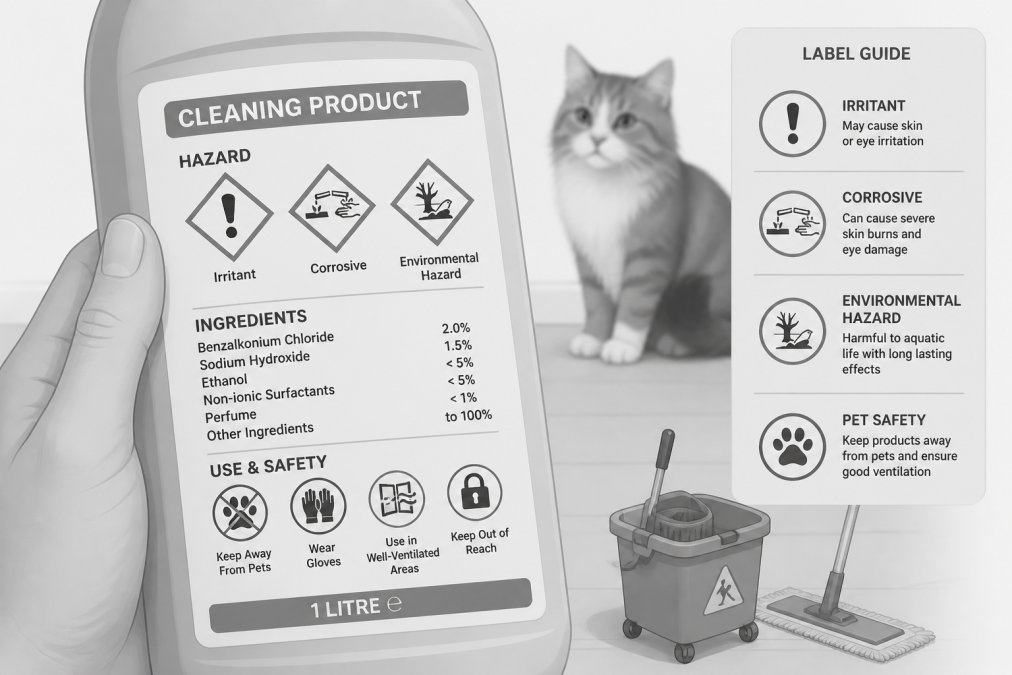
Labels must display hazard symbols under UK and EU regulations. Look for the health hazard symbol (exclamation mark in a diamond), which indicates respiratory irritation or systemic toxicity. The corrosion symbol (hand dissolving) indicates chemical burns. The acute toxicity symbol (skull and crossbones) means the product is poisonous if ingested. However, absence of these symbols doesn’t mean the product is safe for pets; many pet-toxic ingredients don’t carry warnings because they’re tested on human toxicity thresholds, not animal sensitivity.
The ingredient list matters more than marketing claims. Products labelled “natural” or “eco-friendly” often contain essential oils or plant-derived compounds that are actually more toxic to pets than synthetic alternatives.
Understanding Safety Data Sheets (SDS)
Every commercial cleaning product has a Safety Data Sheet (SDS). These documents contain detailed information about chemical composition, hazard classification, and first-aid measures. Requesting an SDS from your supplier gives you access to information manufacturers don’t advertise on product labels.
The SDS lists every ingredient above 1% concentration. Section 11 covers toxicological information, including acute toxicity data. When evaluating an SDS, focus on specific ingredients rather than overall toxicity classifications. Look for phenol, cresol, ammonia above 5% concentration, bleach, formaldehyde, and phthalates.
Request the SDS before purchasing in bulk. Most suppliers, including Discounted Cleaning Supplies, can provide these documents on request. Comparing SDS documents between products often reveals that “premium” brands contain identical hazardous ingredients as budget alternatives.
Third-party certification verification
Third-party certifications provide some assurance, but not all certifications guarantee pet safety. The Ecolabel (EU Flower) and Nordic Swan certifications have strict criteria for ingredient restrictions, making certified products generally safer than uncertified alternatives.
Beware of unverified claims. “Pet-safe,” “non-toxic,” and “gentle” are marketing terms without regulatory definition. Verify these claims by checking the ingredient list and SDS rather than accepting marketing language at face value.
Pet-Friendly Cleaning Products UK: Natural and Eco-Friendly Options
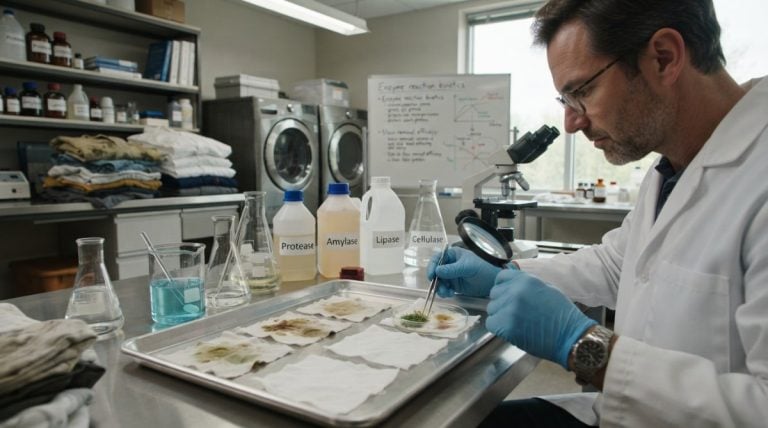
Effective pet-safe cleaning doesn’t require sacrificing cleaning power. The most reliable pet-safe products are those with minimal ingredient lists and no essential oils, ammonia, bleach, or phenolic compounds. Products using plant-derived surfactants and simple inorganic compounds tend to be safer. Enzyme-based cleaners break down organic matter without toxic residues, making them particularly useful for pet accidents.
Discounted Cleaning Supplies stocks Abbey and other brands offering genuinely pet-safe formulations using biodegradable surfactants, simple inorganic salts, and water-based delivery systems. With over 8,000 cleaning products available, you can find pet-safe alternatives for virtually any cleaning task.
DIY pet-safe cleaning solutions with vinegar and baking soda
Simple household ingredients provide effective cleaning without any pet toxicity risk. White vinegar (5% acetic acid) cuts grease, disinfects mildly, and deodorises without harmful fumes. Baking soda (sodium bicarbonate) absorbs odours and acts as a mild abrasive.
All-purpose surface cleaner: Mix equal parts white vinegar and water in a spray bottle. Add 10-15 drops of lemon juice for scent (lemon juice, not lemon oil, is safe).
Carpet and upholstery deodoriser: Sprinkle baking soda directly on fabric, allow 15 minutes for odour absorption, then vacuum thoroughly.
Floor cleaner for sealed surfaces: Combine one cup white vinegar, one gallon warm water, and 5-10 drops of castile soap. Mop floors and allow to air-dry.
Bathroom and tile cleaner: Baking soda paste applied to surfaces, left for 10 minutes, then scrubbed and rinsed removes soap scum and mild mildew.
The limitation of DIY solutions is that they lack the antimicrobial properties of true disinfectants. For healthcare settings, food preparation areas, or homes with immunocompromised residents, these solutions alone may be insufficient.
Safe Disinfectant for Pets UK: Effective Germ Control Without Toxins
Pet homes sometimes require true disinfection, not just cleaning. The challenge is achieving antimicrobial efficacy without introducing pet-toxic chemicals.
Quaternary ammonium compounds (quats) in low concentrations offer a middle ground. They disinfect effectively against many pathogens but are less toxic than phenolic or chlorine-based alternatives. However, they still require careful rinsing to prevent residue buildup.
Hydrogen peroxide-based disinfectants represent a safer option. These products break down into water and oxygen, leaving no toxic residue. They’re effective against many bacteria and viruses whilst being significantly safer than bleach or ammonia.
Alcohol-based disinfectants (typically 70% isopropyl alcohol) work quickly and evaporate completely, leaving no residue. They’re safe for pets once dry, though inhalation of vapours should be avoided.
True disinfection requires contact time, typically 10 minutes for most products. Spraying and immediately wiping doesn’t achieve antimicrobial efficacy. Plan disinfection activities when pets can be safely kept away from treated areas for the required contact duration.
Pet Safe Floor Cleaner UK: Protecting Paws and Carpets
Floors present unique challenges because pets walk on them barefoot, then groom their paws. Residual chemicals on floor surfaces pose greater exposure risk than on counters or walls.
Hard floor cleaners for pet homes should avoid ammonia, bleach, and phenolic compounds entirely. Vinegar-based solutions work well on sealed wood, tile, and laminate. For deeper cleaning, enzyme-based products specifically formulated for pet homes break down organic matter without leaving toxic residue.
Carpet cleaning presents greater complexity. Many commercial carpet shampoos contain surfactants, fragrances, and optical brighteners that can irritate pet skin or cause gastrointestinal upset. Enzyme-based carpet cleaners designed for pet stains are safer because they target organic compounds specifically. For routine carpet maintenance, baking soda remains the safest option.
Residue and paw-licking safety after cleaning
The critical safety factor for floor cleaners is residue remaining after application. Even products that are safe at full concentration can cause problems if concentrated residue accumulates on paws and is subsequently ingested during grooming.
Always rinse thoroughly after applying any floor cleaner. For vinegar-based solutions, a second water rinse removes any acidic residue. For commercial products, follow manufacturer instructions for rinsing, then perform an additional rinse. Allow floors to dry completely before allowing pets access. Hydrogen peroxide-based disinfectants need complete drying (typically 10-15 minutes) for the active ingredient to fully decompose.
Pet Safe Laundry Detergent UK: Washing Bedding and Fabrics Safely
Pet bedding requires frequent washing, and residual detergent on fabrics poses chronic exposure risk. Standard laundry detergents often contain fragrances, optical brighteners, enzymes, and surfactants that can irritate pet skin or cause respiratory irritation.
The safest approach is using plain soap or minimal-ingredient detergents. Castile soap (plant-derived, non-toxic) works effectively for pet bedding without introducing problematic chemicals. Vinegar in the rinse cycle serves dual purposes: it removes detergent residue and neutralises odours without introducing new chemicals. Add one cup of white vinegar to the rinse cycle when washing pet bedding.
Avoid fabric softeners entirely when washing pet bedding. These products coat fabrics with compounds that can irritate skin and respiratory systems.
Emergency First-Aid: What to Do if Your Pet Ingests a Cleaning Product
Despite precautions, accidental ingestion of cleaning products happens. Knowing immediate response steps can mean the difference between a minor incident and a serious emergency.
If you observe your pet ingesting a cleaning product, identify the product if possible and remove any remaining product from the pet’s mouth. Contact your veterinary surgery or the Animal Poison Control Centre immediately. In the UK, the Animal Poison Information Service (APIS) at the University of Liverpool provides 24-hour guidance on animal toxin exposure. Have the product name, ingredients, and the amount ingested ready when you call.
Do not induce vomiting unless specifically instructed by a veterinarian. Some chemicals cause additional damage on the way back up. Transport your pet to a veterinary surgery immediately, bringing the product container or label with you.
Prevention remains far more effective than emergency treatment. Store all cleaning products in secure, pet-proof locations. Use pet-safe products exclusively in homes with animals. Supervise pets during and immediately after cleaning, keeping them away from treated areas until surfaces are completely dry.
Safe Cleaning Practices for Pet Homes: Best Practice Tips
Establishing systematic cleaning practices that account for pet safety prevents accidental exposure whilst maintaining household hygiene standards.
Timing and ventilation: Clean when pets can be safely confined to a separate area. Open windows and doors to provide ventilation, which reduces airborne chemical concentration and helps surfaces dry faster. Never use aerosol cleaners in enclosed spaces with pets present.
Product selection protocol: Before purchasing any cleaning product, check the ingredient list and SDS. Cross-reference concerning ingredients against pet toxicity databases. If uncertain, contact the supplier; Discounted Cleaning Supplies staff can advise on pet safety for any product in their range.
Application and contact time: Apply cleaners only to areas requiring treatment. Don’t oversaturate surfaces; minimal application reduces residue risk. Allow contact time specified by the manufacturer (typically 5-10 minutes) for disinfection efficacy, then rinse thoroughly.
Drying and access: Never allow pets access to cleaned areas until surfaces are completely dry. For hard floors, this typically means 15-30 minutes depending on ventilation. For carpets, allow longer drying time.
Regular assessment: Periodically review your cleaning product inventory. Discard products containing ammonia, bleach, essential oils, or phenolic compounds. Replace them with genuinely pet-safe alternatives.
Pet bedding and food areas: These require the highest safety standards. Wash pet bedding weekly using minimal-ingredient detergent plus vinegar rinse. Never use fabric softeners or scented products. Clean food and water bowls with hot water and plain soap, rinsing thoroughly.
| Practice | Implementation | Frequency | Safety Benefit |
|---|---|---|---|
| Ingredient review | Check labels before purchasing | Every purchase | Prevents toxic product introduction |
| Ventilation during cleaning | Open windows, allow air circulation | Every cleaning session | Reduces airborne chemical concentration |
| Surface drying | Allow complete drying before pet access | After every application | Prevents paw-licking of wet residue |
| Pet bedding washing | Use minimal-detergent + vinegar rinse | Weekly | Eliminates chronic chemical exposure |
| Product inventory rotation | Discard hazardous products, replace with safe alternatives | Quarterly | Ensures only safe products remain in home |
| Food/water bowl cleaning | Hot water and plain soap, thorough rinse | Daily | Prevents chemical contamination of nutrition |
Choosing what cleaning products are safe for pets comes down to understanding ingredient toxicity, reading labels carefully, and selecting products with minimal chemical complexity. Households with pets benefit from using genuinely pet-safe products throughout their cleaning routines. Discounted Cleaning Supplies offers a comprehensive range of pet-safe cleaning solutions, including Abbey brand products specifically formulated to eliminate hazardous ingredients whilst maintaining cleaning efficacy. By selecting products with transparent ingredient lists, simple formulations, and documented safety profiles, you can maintain a clean, hygienic home without exposing your animals to unnecessary chemical risk.
Frequently Asked Questions
What cleaning ingredients are most toxic to pets?
The most dangerous cleaning ingredients for pets include ammonia, bleach, phenol, formaldehyde, and phthalates. Ammonia and bleach are particularly hazardous, even inhaling fumes can cause respiratory irritation. Phenol damages mucous membranes and can be absorbed through skin contact. Essential oils, whilst natural, can be toxic to cats and some dogs. Always check the Safety Data Sheet (SDS) and avoid products listing these chemicals. If ingestion occurs, contact your veterinarian or the Animal Poison Control Centre immediately.
Are natural and eco-friendly cleaning products always safe for pets?
Not necessarily. Whilst many natural cleaners like vinegar and baking soda are pet-safe, some ‘natural’ products contain essential oils (particularly tea tree, eucalyptus and citrus oils) which are toxic to pets. Always verify the complete ingredient list rather than relying on marketing claims. Look for third-party certifications like Leaping Bunny or the Vegan Society to confirm pet-safe formulations. Hypoallergenic labels don’t guarantee pet safety, read the full ingredient list and SDS before use.
How can I safely clean pet stains and odours without harsh chemicals?
Enzymatic cleaners are excellent for pet stains and odours as they break down organic matter without toxic surfactants. Mix equal parts white vinegar and water for a pet-safe disinfectant alternative. Baking soda neutralises odours naturally, sprinkle on carpets, leave for 15 minutes, then vacuum. For laundry, use pet-safe detergents without dyes or perfumes. Always test solutions on inconspicuous areas first and ensure thorough rinsing to remove all residue, as paw-licking can cause irritation even from dried chemical residues.
What should I do if my pet ingests a cleaning product?
Act immediately. Do not induce vomiting unless specifically instructed by a veterinarian. Contact your vet or the Animal Poison Control Centre with the product name and ingredients (check the label or SDS). Keep the product container or packaging available. Monitor your pet for symptoms including vomiting, diarrhoea, difficulty breathing, lethargy or excessive drooling. For ingestion of bleach or ammonia, seek emergency veterinary care. Time is critical, veterinary treatment within the first few hours significantly improves outcomes.